
Crevano · Templates · Brochure Templates
Brochure Templates
10 brochures, every one a two-sided 11 × 8.5 sheet built as a fold (tri-fold, bi-fold or Z-fold), at 300 DPI with 0.125 inch of bleed. Each has the panel geometry done properly, which is the part of a folded brochure that goes wrong and cannot be fixed after printing.
| Trim size | 11 × 8.5 in |
|---|---|
| Bleed | 0.125 in |
| Resolution target | 300 DPI |
| Templates | 10 |
| Pages | 20 |
No templates match that.
Brochure templates (10)
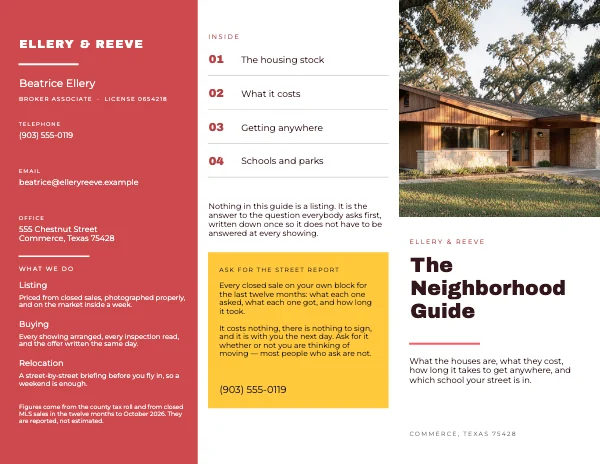 Real Estate Neighborhood Guide Tri-FoldPro
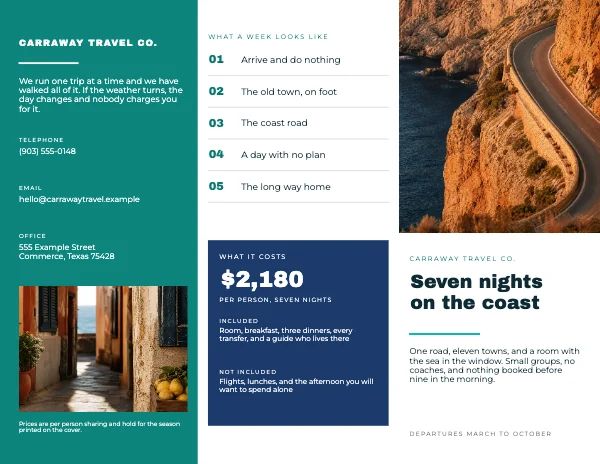 Travel Destination Tri-Fold BrochurePro
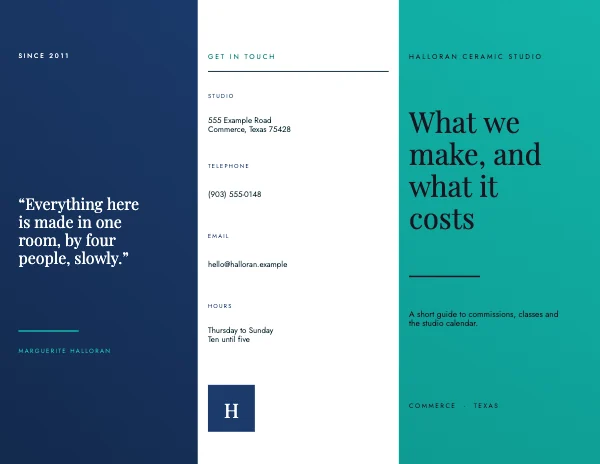 Modern Tri-Fold Services BrochurePro
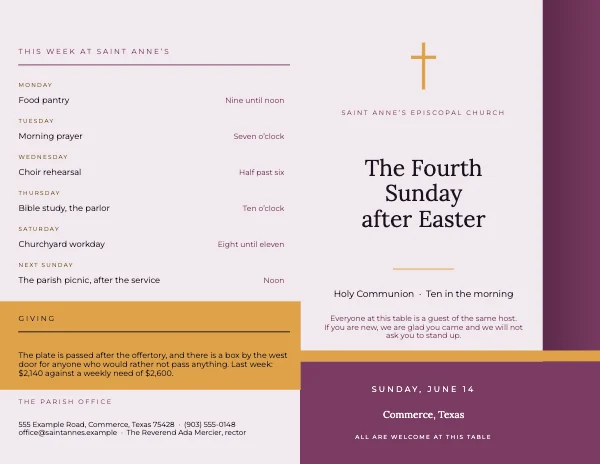 Warm Bi-Fold Church Bulletin
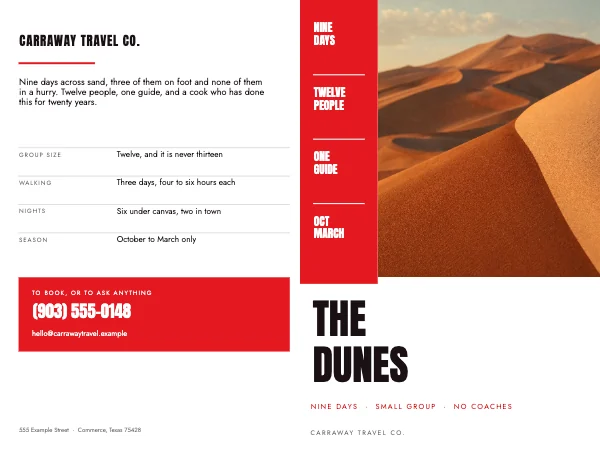 Travel Destination Bi-FoldPro
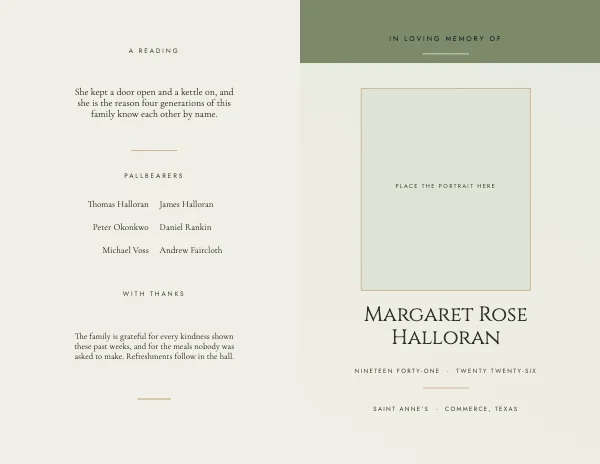 Classic Bi-Fold Funeral Program
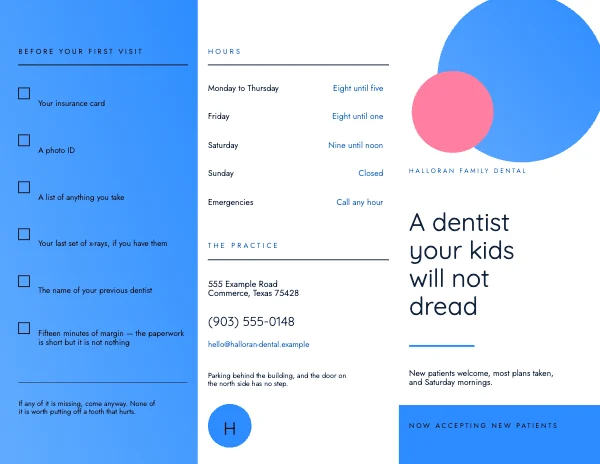 Soft Tri-Fold Dental Practice Brochure
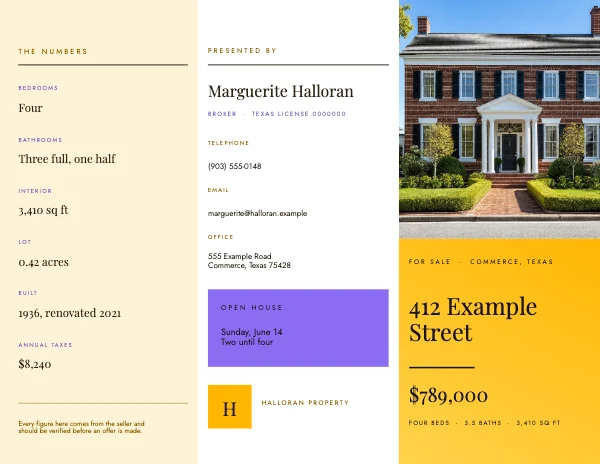 Editorial Tri-Fold Real Estate Listing Brochure
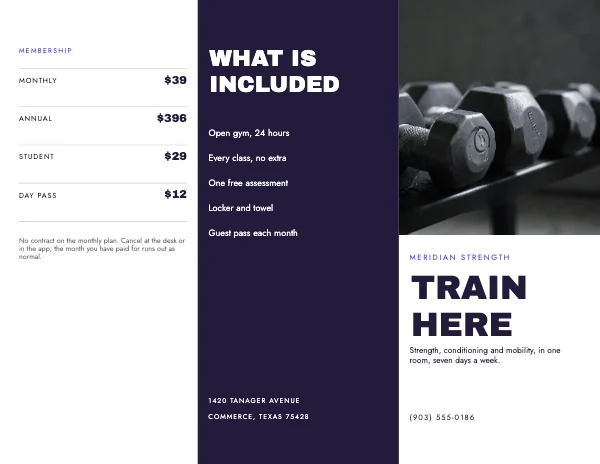 Fitness Tri-Fold BrochurePro
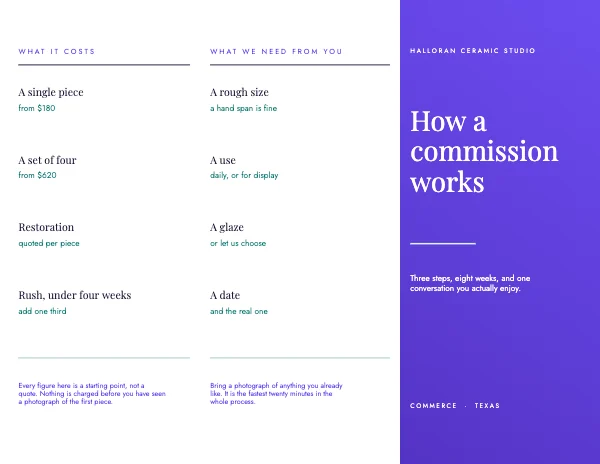 Modern Z-Fold Three-Step BrochurePro
The trifold panels are not equal, and this is the whole trick
An 11 × 8.5 sheet — letter, landscape — folded in three does not divide into three panels of 3.667 inches. The panel that folds inside has to be narrower, or it hits the fold and the brochure will not close flat — it bulges, and the outer edge creeps out past the cover.
The standard set for a letter trifold, folded landscape:
| Panel | Width |
|---|---|
| Outer left (back cover when folded) | 3.6875 in |
| Middle | 3.6875 in |
| Inner right (tucks inside) | 3.625 in |
That sixteenth of an inch is the difference between a brochure that closes and one that does not, and it is invisible in every on-screen preview. A design laid out in equal thirds looks correct until a thousand of them arrive.
That number comes from a printer's own folding calculator, not from dividing 11 by three, and it changes with the fold type and with the stock weight. A Z-fold has no nesting at all — its panels really are equal thirds, 3.6667 each, because no panel travels inside another. A gate-fold nests two.
Which panel tucks depends on the fold direction, so agree the fold with the printer before you lay it out — a roll fold, a Z fold and a gate fold all put the short panel somewhere different. Send a folded paper dummy or a diagram with your file.
The reading order is not the layout order
The other trifold trap. The panels on the printed sheet are not in the order a reader meets them, and it is easy to write good copy into the wrong panel.
Folded, the reader sees: the cover, then opens to the inside spread (three panels at once), then may turn it over for the back. The panel that ends up as the back cover is on the outside sheet next to the cover, and the panel a reader sees first when they open it is the flap.
The practical method: fold a blank sheet, number the panels in the order you meet them, unfold it. That numbered sheet is your layout map, and it takes one minute and prevents the single most common brochure error.
Bleed, folds and safe margins
0.125 inch of bleed on the outside edges of the flat sheet. Not on the folds — the folds are in the middle of the paper.
Keep type 0.25 inch away from a fold on each side. A fold is not a precise line: the sheet shifts a little in the folder, and a heading crossing a fold arrives with the crease through a letter. A photograph or a color field crossing a fold is fine and often good; type is not.
Ask for a score on anything above about 100 gsm / 80 lb text. Heavier stock cracks white along an unscored fold, and on a colored panel the crack is the first thing anyone sees.
Multi-page brochures and the multiple of four
A stapled (saddle-stitched) booklet is made of folded sheets, so its page count is always a multiple of four. A 6-page booklet does not exist; it is an 8-page booklet with two blank pages, and deciding where those blanks go is a design decision rather than an accident to discover at the printer.
Also: creep. On a thick saddle-stitched booklet the inner pages push outward slightly when folded, so the outer margin on the middle spread is trimmed narrower than on the outside pages. Under about 32 pages it is not worth worrying about; past that, keep the outer margin generous and ask the printer whether they compensate.
Questions
What size is a trifold brochure?
An 11 × 8.5 sheet — letter turned landscape — folded in three. The finished panels are about 3.6875 inches wide, except the one that tucks inside, which is 3.625 — that difference is what lets the brochure close flat.
Why are trifold panels not equal?
Because the inner panel has to fit inside the other two. Equal thirds bulge at the fold and the outer edge creeps past the cover. The short panel is about a sixteenth of an inch narrower. A Z-fold is the exception — it folds like a concertina, nothing tucks inside anything, and its panels genuinely are equal thirds.
How do I know which panel is which?
Fold a blank sheet, number the panels in the order you meet them as a reader, then unfold it. That numbered sheet is your layout map. The panel order on the flat sheet is never the reading order.
How much bleed does a brochure need?
0.125 inch on the outside edges of the flat sheet. Folds do not need bleed — they are in the middle of the paper. Keep type at least a quarter inch back from every fold.
Should I get the brochure scored?
Yes on anything heavier than about 80 lb text. Unscored heavy stock cracks white along the fold, and on a dark panel that white line is the first thing anyone notices. Scoring costs almost nothing.
Why does my booklet have to be a multiple of four pages?
Because a saddle-stitched booklet is made of folded sheets, and each sheet makes four pages. A six-page booklet is an eight-page booklet with two blanks — decide where they go rather than letting the printer decide.
Can I print a brochure at home?
A trifold, yes — it is a letter sheet, and you fold it yourself. Export without bleed, print at actual size, and use a bone folder or the edge of a ruler for a clean crease. A saddle-stitched booklet needs a shop.
Can a photo cross a fold?
Yes, and it often looks good. Type crossing a fold does not — the sheet shifts slightly in the folding machine and the crease lands through a letter. Keep headings a quarter inch clear on each side.
Can I use these for business and client work?
Yes, including commercially and for client work, free plan included, with no watermark, no royalty and no credit.
Where to go next
Put together an occasion
Every category
How printing works
Open any of these and it is already the right size. Bleed, margins and trim are set, and there is no watermark on anything you export — on any plan, ever.