
Crevano · Templates · Printable Invoice Templates
Printable Invoice Templates
6 invoices at 8.5 × 11, editable in the browser. One is plain and carries every field an invoice needs and nothing it does not. The other five are built around how a particular trade is actually paid, which is the part a generic invoice gets wrong.
| Trim size | 8.5 × 11 in |
|---|---|
| Bleed | none |
| Resolution target | 300 DPI |
| Templates | 6 |
| Pages | 6 |
No templates match that.
Invoice templates (6)
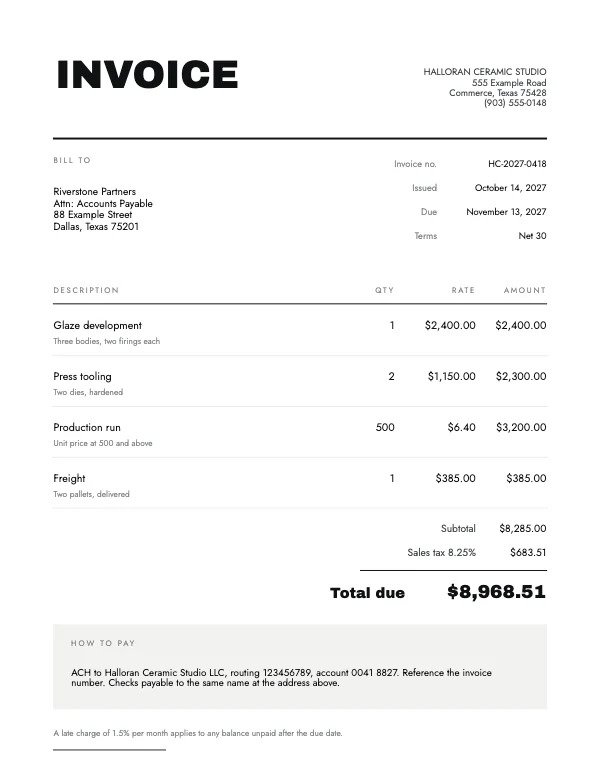 Minimalist InvoicePro
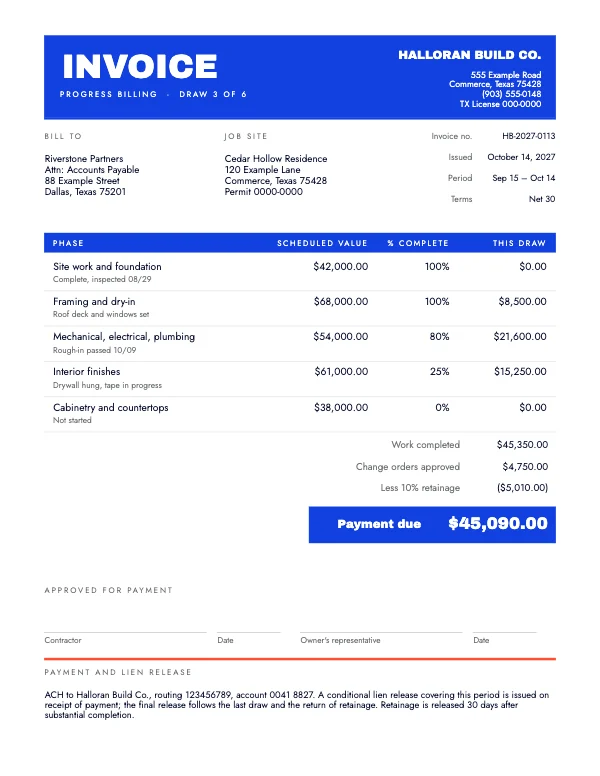 Contractor Progress InvoicePro
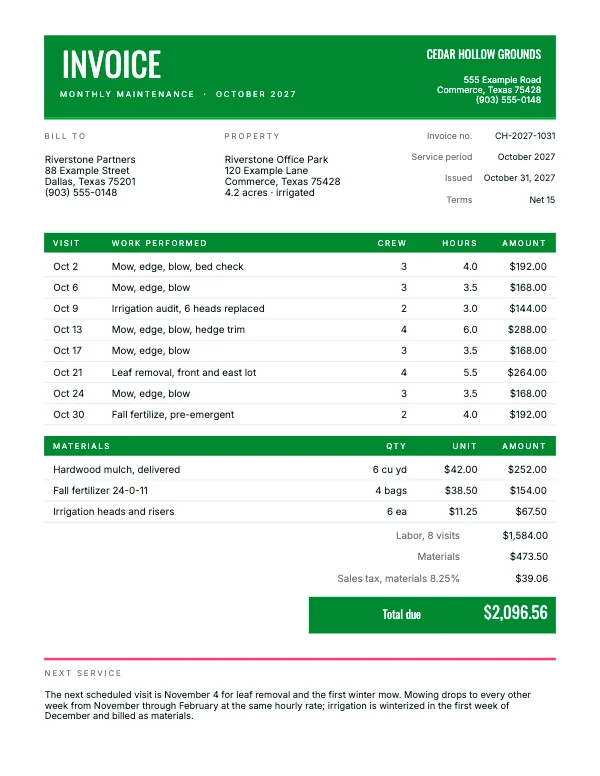 Landscaper Monthly InvoicePro
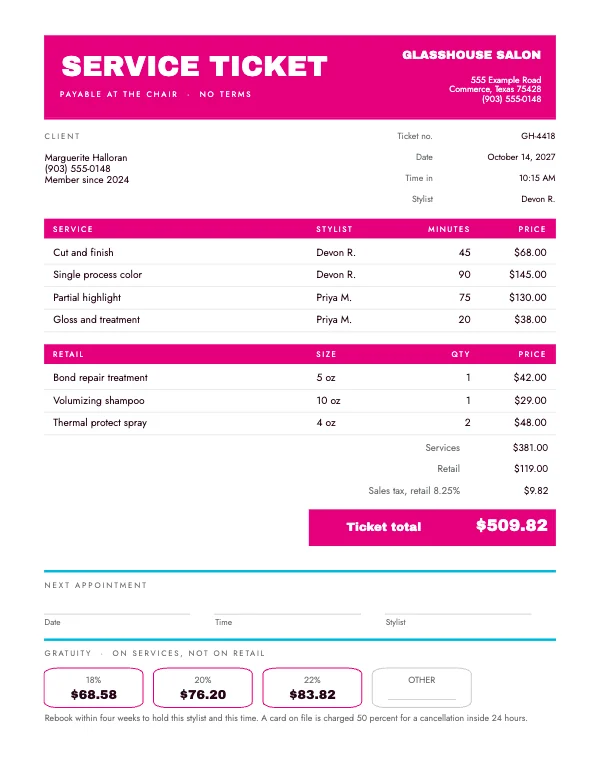 Salon Service TicketPro
 Tutor Session InvoicePro
 Photographer Session InvoicePro
What is free here, and what is not
Every one of these 6 templates will be on the paid plan — that is what the badge in the corner of each thumbnail means. Saying so here rather than at the export button is deliberate. Setting up a page at any of these sizes and designing it from scratch is still free; what the paid plan buys you is the template itself and the print output.
Crevano is a paid design app with a free basic tier. Opening the studio and designing in it costs nothing beyond a free account — your own photographs, the element library, screen exports as PNG or JPG, cloud saving, and a project file you can keep on your own device — and there is no watermark on anything you export, on any plan, ever. The paid plan will be the rest of the template library, the print PDF with bleed and crop marks, and the KDP export; it is not open for sign-ups yet, so nothing here is withheld in the meantime.
On either plan, what you make is yours to publish and sell. No royalty, no credit, the permission does not expire, and it still holds if you cancel. What you may not do is resell our photographs and clip art as things in themselves.
A generic invoice is wrong in a specific way for every trade
The fields on a standard invoice — bill to, line items, subtotal, tax, net 30 — describe one payment model: work is finished, an invoice is sent, money arrives a month later.
Most trades are not paid that way, and the mismatch is not cosmetic. It is the difference between an invoice that gets paid and one that starts a phone call.
- A contractor is paid in draws against a schedule of values, before the job is finished, with retainage withheld. A "net 30" on a construction invoice is not how the money moves.
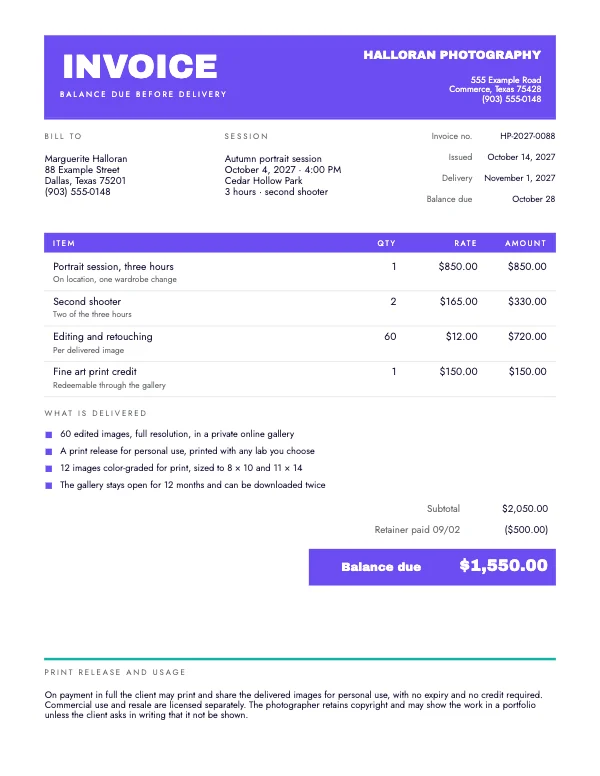
- A photographer takes a retainer at booking and is paid the balance before delivery, not thirty days after. Put net 30 on a session invoice and you have handed over the files and started a wait.
- A salon is paid at the chair. There is no due date, because the transaction is complete before the client stands up — and there is a gratuity line, which is the one field an invoice never has and a service ticket always does.
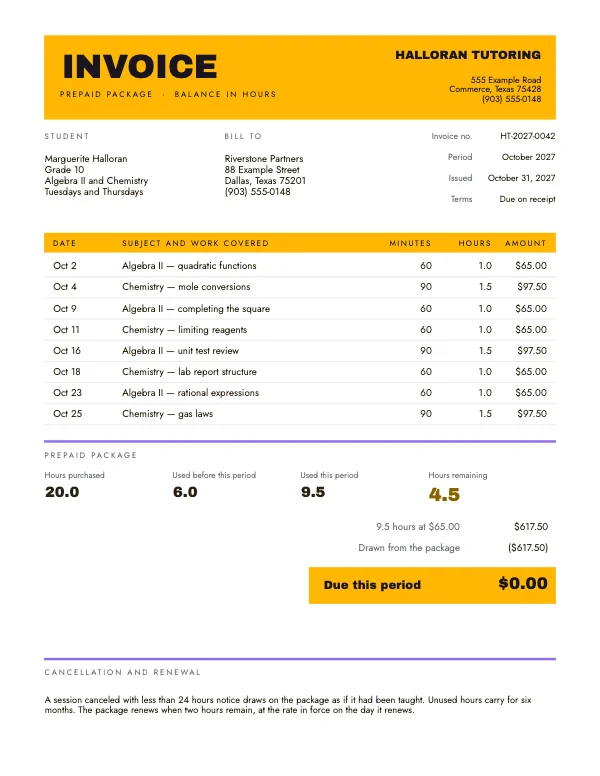
- A tutor is usually paid up front for a package, so the balance owed is measured in hours rather than dollars, and the person paying is not the person taught.
- A landscaper bills a month of visits as one document, so the useful line item is a visit log with dates and crew hours, not a single line reading "grounds maintenance."
Each of those is a different document, and each of the five is that document rather than the plain one with a trade's name typed at the top.
Which invoice fits how you get paid
| Trade | Template | The field that makes it different |
|---|---|---|
| Anyone | Plain invoice | Every field an invoice needs and nothing it does not |
| Construction, remodel, trades | Contractor progress invoice | Schedule of values with percent complete, approved change orders above the total, and 10 percent retainage withheld on the face of the document rather than left to a conversation |
| Lawn care, grounds, gardening | Landscaper monthly invoice | Eight visits logged by date with crew size and hours; materials billed in cubic yards and bags, the units they are bought in; next scheduled visit printed at the foot |
| Photography | Photographer session invoice | Retainer subtracted on the face, balance due before delivery, deliverables listed with counts, and the print release stated in one sentence |
| Salon, barber, beauty | Salon service ticket | No terms and no due date. Services and retail as two separate tables, because they commission and tax differently — and a gratuity block with three amounts calculated plus a blank |
| Tutoring, lessons, test prep | Tutor session log | Student and payer as separate blocks, balance carried in hours, sessions logged by date and subject, and the 24-hour cancellation rule on the document instead of in a policy nobody kept |
If none of the five is your trade, start from the one whose payment model matches yours, not the one whose name is closest. A dog groomer wants the salon ticket; a music teacher wants the tutor log; a handyman on a fixed price wants the plain one.
Every cell is its own element, which is the whole point
An invoice is a document you fill in every time, so the only property that matters after the first use is how fast it is to change.
Each field on these is a separate text element — not a cell in a table image, not part of a paragraph held together by tab stops. A line item row can be duplicated without retyping the row above it, and a rate can be changed in one place two years from now.
This is also why they are not PDFs. A flattened invoice template is a picture of an invoice: you can print it and write on it, and you cannot edit it. These stay editable, and the export is what you send.
The fields to check before you send the first one
A template can supply the structure. It cannot know your numbers, and four fields are the ones that cause a payment to be late.
A unique invoice number, and a system for it. Sequential is fine. What is not fine is two invoices with the same number, because that is the one thing that makes a client's accounts payable department stop and ask rather than pay. 2027-014 beats Invoice.
Both dates. Issue date and due date, as two separate fields. "Net 30" without an issue date is thirty days from an argument.
How to pay, written out. The single most common reason an invoice sits unpaid is that the person holding it does not know where to send money. Bank details, a payment link, or a plain sentence.
The tax line, which is yours to set. Rates and registration numbers vary by country, state and what you sell, and no template can supply them. The line is there; the number is yours.
These are business documents, not legal or tax advice — what an invoice is required to show, and what you must charge, is set by your jurisdiction and your accountant.
Questions
What size are these invoices?
All 8.5 × 11 inches — US Letter — at 300 DPI. They print on any home or office printer and export as a PDF to email.
Can I edit them?
Yes, in the browser, and every field is a separate element. A line item row duplicates without retyping the row above it, and a rate changes in one place. That is the reason to keep the project rather than only the exported PDF.
Which invoice template should I use?
Match the payment model, not the job title. If you are paid in stages before the work is done, the contractor progress invoice. If you are paid at the counter, the salon ticket. If you are paid up front for a block of time, the tutor log. If you invoice and wait, the plain one.
What does an invoice have to include?
At minimum: who is billing, who is billed, a unique invoice number, the issue date, the due date, the line items, any tax, the total and how to pay. All of those are on every template here. What your jurisdiction additionally requires — a tax registration number, particular wording — is set by your regulator and your accountant, not by a template.
What is retainage, and why is it on the contractor invoice?
A percentage of each payment held back by the client until the job is complete — 10 percent is typical in construction. It is on the face of that invoice deliberately, because retainage that is assumed rather than stated is the single most common source of a disputed construction payment.
Why does the photographer invoice say the balance is due before delivery?
Because that is how the trade is paid, and it is the field that would be wrong on every other invoice in this set. A photographer who bills net 30 has already handed over the deliverable, which removes the only leverage in the transaction.
Can I use these commercially?
Yes — these are for billing your own clients, which is about as commercial as a document gets. No royalty, no credit, and the permission does not expire. What you may not do is resell the template files themselves.
Where do these sit in the library?
Inside Business Documents, alongside letterhead, proposals and one-pagers. This page collects them because an invoice is a thing people look for by name; it is not a separate section.
Where to go next
Put together an occasion
Every category
How printing works
Open any of these and it is already the right size. Bleed, margins and trim are set, and there is no watermark on anything you export — on any plan, ever.