
Crevano · Templates · Wall Art Templates
Wall Art Templates
Wall art sized to frames you can buy off a shelf: 8 × 10, 11 × 14, 12 × 12 and 16 × 20. 12 prints, each laid out with the mat rebate already allowed for, so nothing you care about ends up under the mat board.
| Trim sizes | 16 × 20 in · 11 × 14 in · 12 × 12 in · 8.5 × 11 in · 8 × 10 in · 5 × 7 in · 4 × 6 in |
|---|---|
| Bleed | none |
| Resolution target | 200 DPI · 300 DPI |
| Templates | 12 |
| Pages | 12 |
No templates match that.
Wall art templates (12)
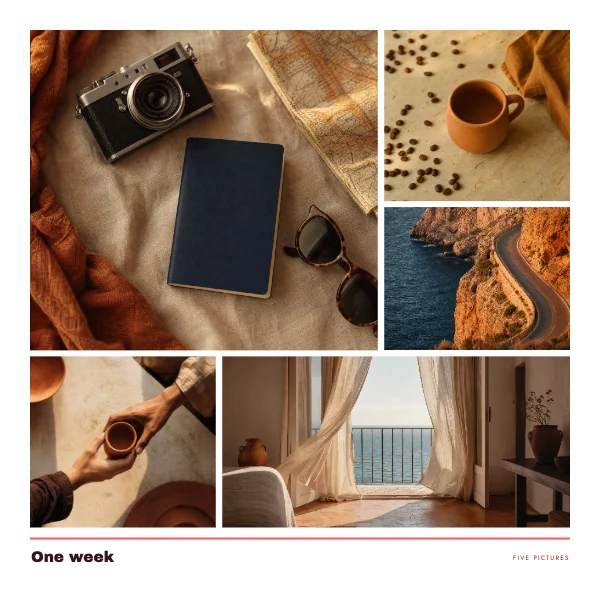 Scrapbook Photo Collage PagePro
 Abstract Color Field Print
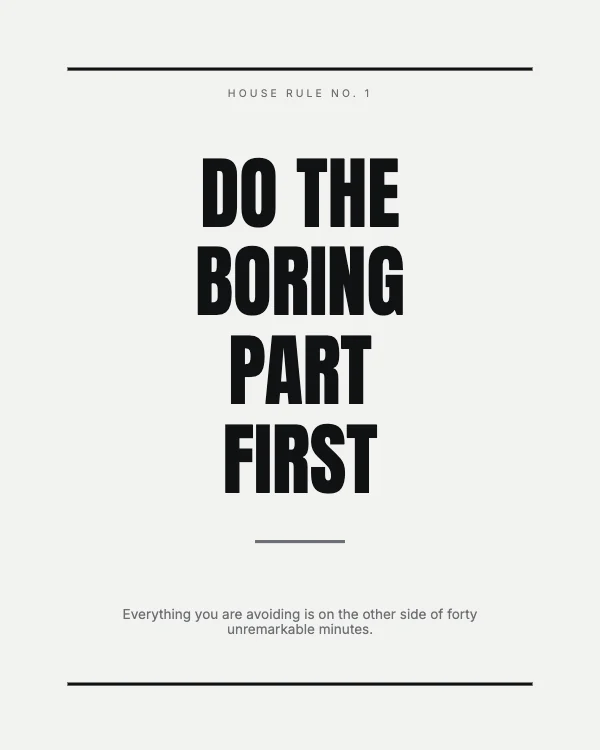 Typographic Quote Print
 Warm Desert Wall PrintPro
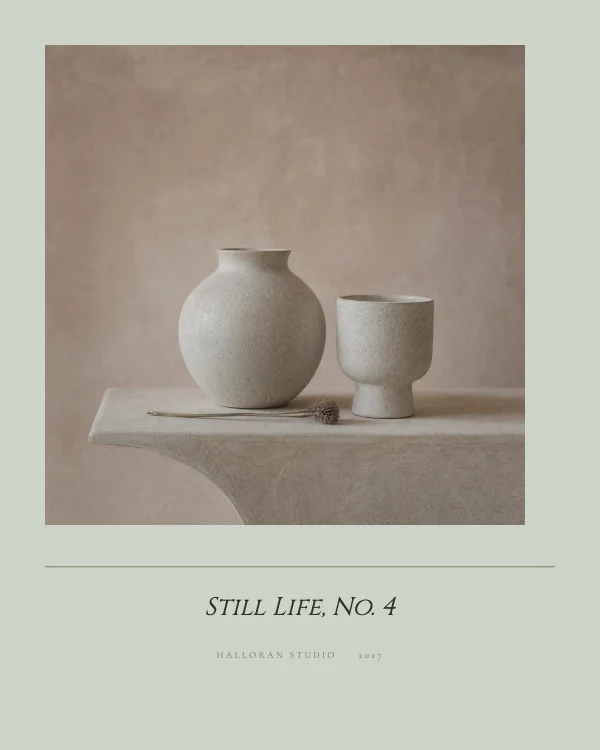 Minimalist Botanical Wall PrintPro
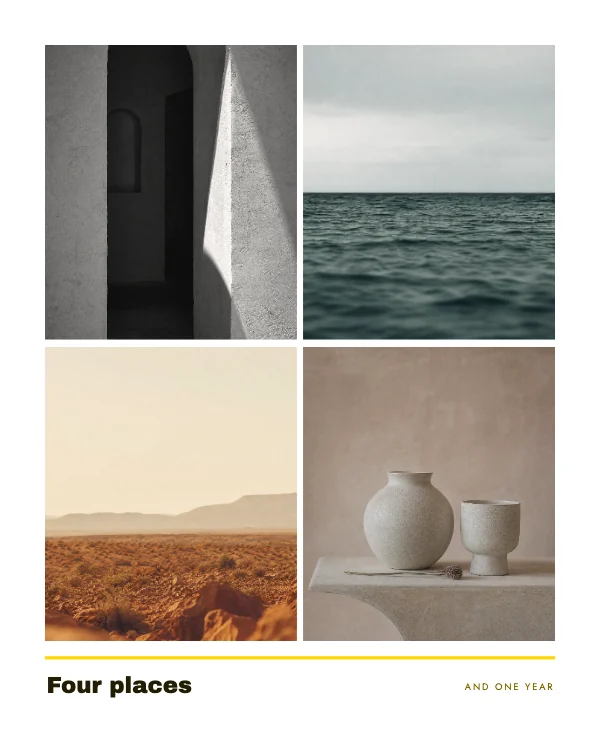 Four Frame Photo Collage PrintPro
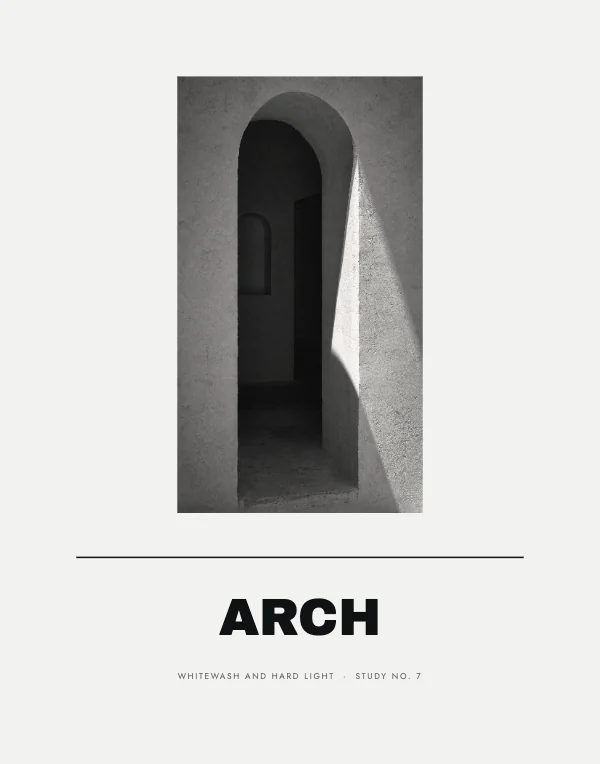 Modernist Architecture Print
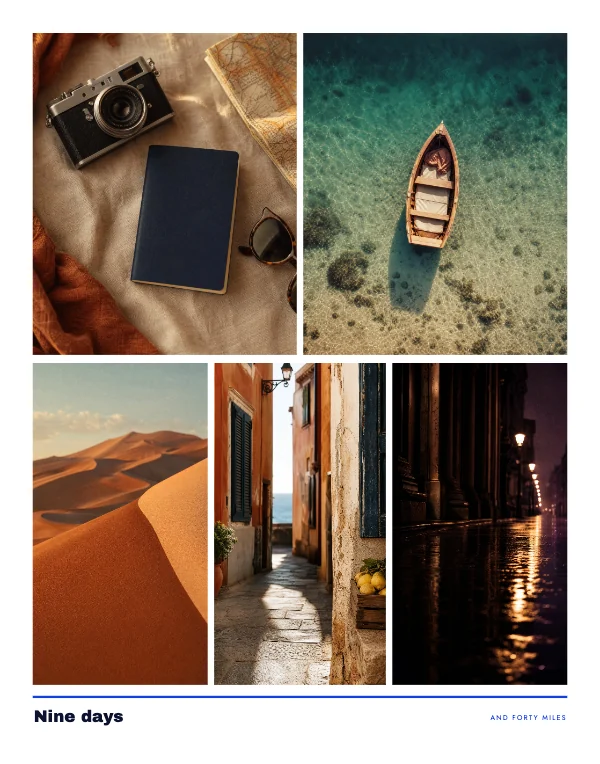 Five Frame Photo Collage PrintPro
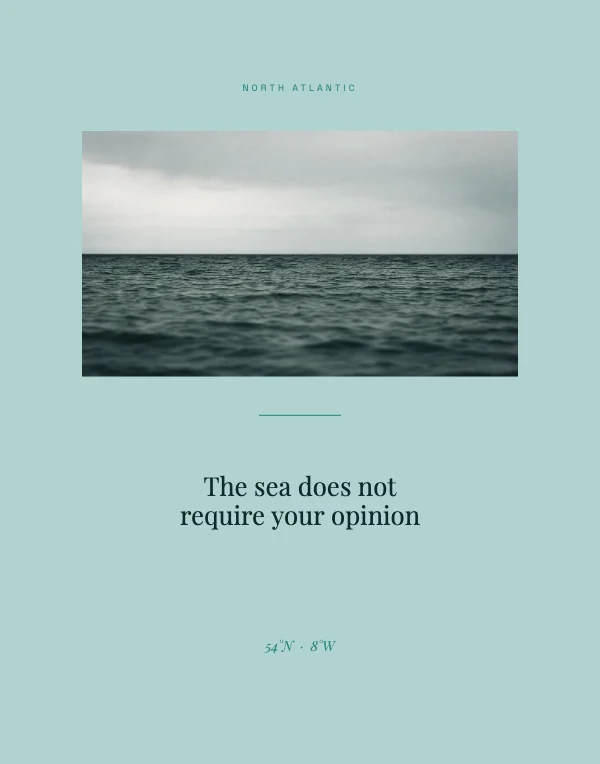 Calm Ocean Wall Print
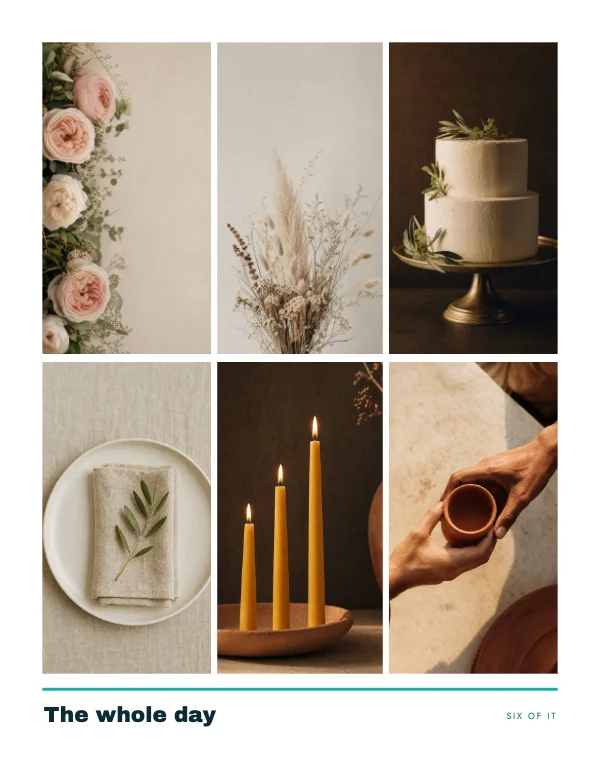 Six Frame Photo Collage SheetPro
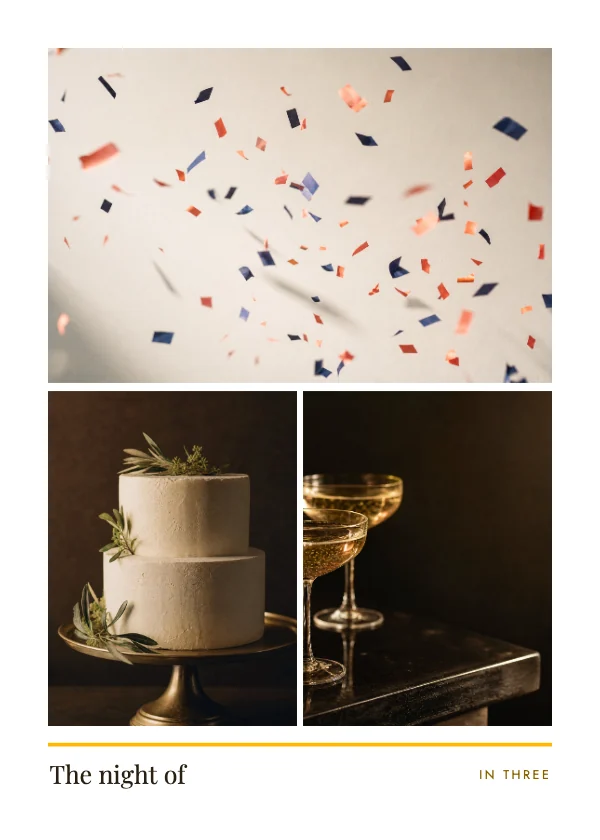 Three Frame Photo Collage PrintPro
 Two Frame Photo Collage Print
Design to the frame, not to the wall
Wall art is the one category where the size is chosen for you before you start, because frames are sold in fixed sizes and mats are cut for those sizes. A print at 9 × 12 is a print that needs a custom frame, and a custom frame costs more than the print.
| Size | Why it exists |
|---|---|
| 8 × 10 in | The most-stocked frame size in the US. Fits everywhere, cheap everywhere, and prints on 8.5 × 11 paper with a margin |
| 11 × 14 in | The step up. Still stocked in every store, and the standard size for a matted 8 × 10 |
| 12 × 12 in | Square. Sold for scrapbook and record-sleeve frames; the common square gallery size |
| 16 × 20 in | The large stocked size. Beyond this, frames start being ordered rather than bought |
The pairings worth knowing, because they are how galleries are actually hung: an 8 × 10 print in an 11 × 14 frame with a mat, and an 11 × 14 print in a 16 × 20 frame with a mat. Both are standard, both look considered, and both cost less than a larger print.
There is no bleed on any of these, and that is deliberate
Every other category on this site carries 0.125 inch of bleed. These do not, for a specific reason: a print that goes into a frame is not trimmed to its edge — it is covered at its edge.
Either the frame's rebate holds the outer few millimeters of the paper, or a mat overlaps it. In both cases the outer edge is hidden rather than cut, so there is nothing for bleed to protect against, and adding it just means printing an image that gets covered up.
What replaces bleed here is the rebate allowance, and it is a bigger number than bleed ever is.
The mat rebate, and the quarter inch that eats signatures
A picture mat is cut with an opening smaller than the print, so the print has something to be held by. The standard overlap is about 0.25 inch on each side, and the frame's own rebate takes a further 0.125 to 0.25 inch if there is no mat.
That means an 8 × 10 print, matted, shows about 7.5 × 9.5 inches. Anything in that outer quarter inch is gone: the signature, the edition number, the thin decorative border, the bottom of a descender on the last line. This is the most common wall-art disappointment and it is entirely predictable.
The templates keep all content inside a 0.5 inch safe margin, which survives a mat, a rebate, and a print that was not cut perfectly square. If you are signing a print, sign it in the visible area or on the mat itself — not in the quarter inch that is about to be covered.
Resolution, by size, and the honest floor
Wall art is looked at from a few feet, not from ten, which puts it between a card and a poster.
| Size | Sensible target | Pixels needed | Absolute floor |
|---|---|---|---|
| 8 × 10 in | 300 DPI | 2,400 × 3,000 | 200 DPI |
| 11 × 14 in | 300 DPI | 3,300 × 4,200 | 200 DPI |
| 12 × 12 in | 300 DPI | 3,600 × 3,600 | 200 DPI |
| 16 × 20 in | 240 DPI | 3,840 × 4,800 | 180 DPI |
The floor is where it starts to be visible at the distance the piece is looked at. Below about 180 DPI on wall art you can see the softness from three feet, which is where people stand.
Type is stricter than photographs. A soft photograph reads as atmosphere; soft type reads as a mistake, because the eye knows exactly what the edge of a letter should look like. If a quote print is going to 16 × 20, keep the target at 300 rather than 240 — the type is the whole piece.
Printing wall art at home
8 × 10 is the one that works. It fits an 8.5 × 11 sheet with a quarter inch of margin all round, which is inside almost every home printer's unprintable area, so you get the whole image with a small white border — and the border disappears under the mat anyway.
11 × 14 does not fit a letter sheet. It needs 11 × 17 tabloid paper, which some home printers take and most do not. If yours does not, a print counter will do 11 × 14 on photo paper cheaply, and so will an online print service.
12 × 12 and 16 × 20 go out. Neither fits any home paper size.
Paper matters more here than anywhere else on this site, because the print is the finished object rather than a step toward one. A matte or textured art paper suits type and illustration; a luster or semi-gloss photo paper suits photographs and holds much deeper blacks. Plain copy paper looks like copy paper behind glass, and glass is unforgiving.
Questions
What size should printable wall art be?
Match a frame you can actually buy: 8 × 10, 11 × 14, 12 × 12 or 16 × 20. A non-standard size means a custom frame, which usually costs more than the print. 8 × 10 is the easiest to frame and the only one that prints comfortably at home.
Do I need bleed on wall art?
No. A framed print is covered at the edge by the mat or the frame rebate rather than trimmed, so there is nothing for bleed to protect. What you need instead is a safe margin — keep everything at least half an inch inside the edge.
How much does the mat cover?
About a quarter inch on each side, and the frame rebate can take another eighth to a quarter on top of that if there is no mat. An 8 × 10 print behind a standard mat shows roughly 7.5 × 9.5 inches. Sign in the visible area, not in the covered edge.
Can I print 11x14 at home?
Only if your printer takes 11 × 17 tabloid paper — most do not. 8 × 10 fits a letter sheet with a margin and is the practical home size. For 11 × 14 and up, a print counter or an online photo service is cheaper than buying a wide-format printer.
What DPI does wall art need?
300 at 8 × 10, 11 × 14 and 12 × 12; 240 is honest at 16 × 20 because of the viewing distance. Below about 180 DPI the softness is visible from three feet, which is where people stand. Keep type at 300 whatever the size.
What paper should I print wall art on?
A matte or textured art paper for type and illustration; a luster or semi-gloss photo paper for photographs. Weight matters — anything under about 200 gsm ripples behind glass. Plain copy paper looks like copy paper the moment it is framed.
Should I use a mat?
Usually yes. A mat makes a small print look intentional, keeps the paper off the glass so it does not stick over time, and lets you use a larger frame with a smaller print. The standard pairs are an 8 × 10 in an 11 × 14 frame and an 11 × 14 in a 16 × 20.
Can I sell prints made from these templates?
Yes — at a market, in a shop, on Etsy, or through print-on-demand. Free plan included, no royalty, no credit, and the permission does not expire. Check the resolution at the size you are selling rather than the size you designed at.
Why does my print look different from the screen?
Because a screen emits light and paper reflects it. Prints come back slightly darker and less saturated, and the effect is strongest on bright blues and greens. Print one small test on the paper you plan to use before committing to a size or a run.
Where to go next
Sizes in this category
Put together an occasion
Every category
How printing works
Open any of these and it is already the right size. Bleed, margins and trim are set, and there is no watermark on anything you export — on any plan, ever.