
Crevano · Templates · Posters · 24x36 Poster Templates
24x36 Poster Templates
24 × 36 is the full sheet — the largest size most print shops handle as a standard product, and the one people mean by "movie poster". 4 templates at that trim, with 0.125 inch of bleed and a 150 DPI target, which is the honest number for something read from ten feet or more.
| Trim size | 24 × 36 in |
|---|---|
| Bleed | none · 0.125 in |
| Resolution target | 150 DPI |
| Templates | 4 |
| Pages | 4 |
No templates match that.
24x36 poster templates (4)
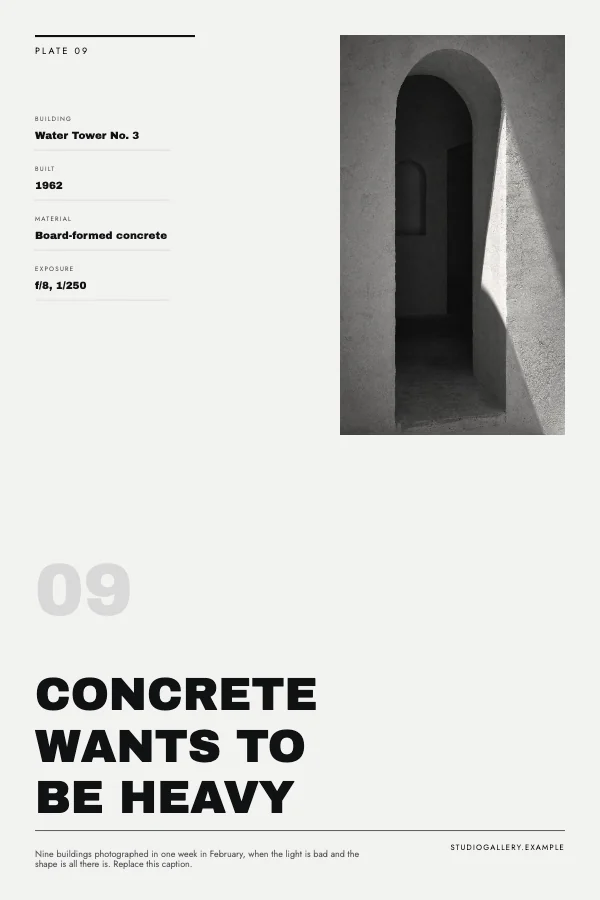 Minimalist Architecture Poster
 Bold Music Festival PosterPro
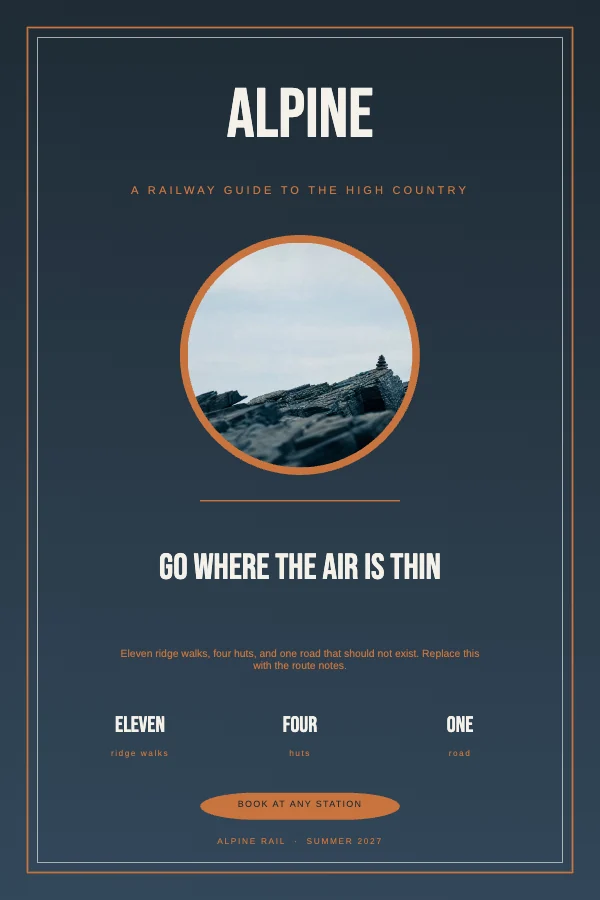 Vintage Mountain Travel PosterPro
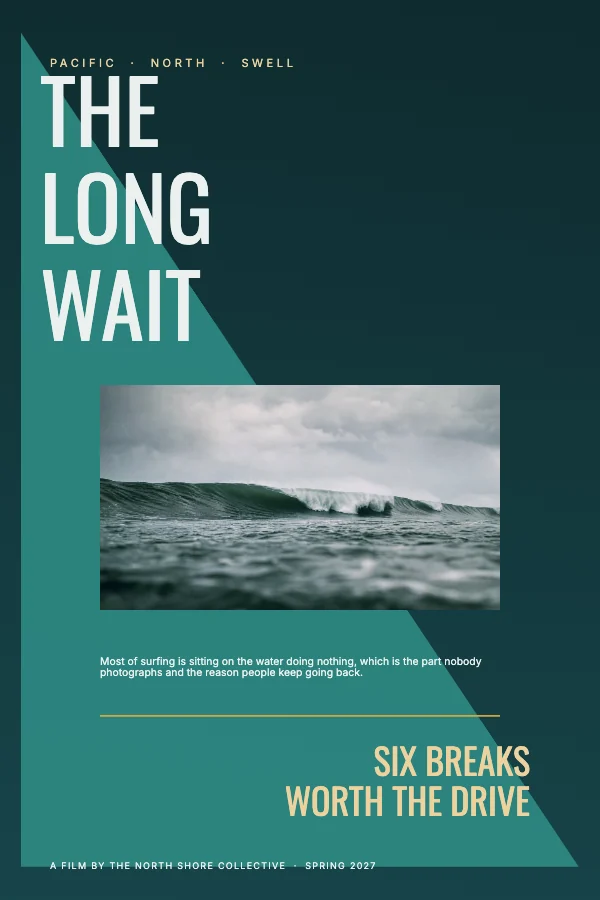 Minimalist Surf PosterPro
Two feet by three feet, and what that means practically
| Trim | 24 × 36 in |
|---|---|
| With bleed | 24.25 × 36.25 in |
| File at 150 DPI | 3,638 × 5,438 px with bleed |
| File at 300 DPI | 7,275 × 10,875 px — 79 megapixels, for no visible gain |
| Text safe area | 0.5 in inside the trim |
| Reads from | 10 feet and up |
| Frames | 24 × 36 is a standard poster frame size; the frame is heavy and needs a wall anchor |
It is twice the area of an 18 × 24, roughly twice the print cost, and about twice the viewing distance. That last one is the reason it exists — a 24 × 36 works down a corridor, across a lobby, from the other side of a road. If the poster is read from six feet, this is the wrong size and 18 × 24 will look better in the space.
150 DPI is correct here, and 300 is a waste
At ten feet the eye cannot resolve anything approaching 300 pixels per inch, so a 24 × 36 at a true 300 is 79 megapixels of detail that literally nobody will see. It will also be a file that some shops refuse to accept and most upload forms time out on.
150 DPI at 24 × 36 gives a 3,638 × 5,438 pixel file with bleed — a perfectly sharp poster at the distance it is looked at, and a file you can email.
The app judges photographs against this document's target rather than a fixed 300, which is why a picture that fails on a card passes here. That is not the app being lenient; it is the app being accurate about the size on the page and the distance it is read from.
Two exceptions worth knowing. Fine type does not follow the same rule — small serif type at 150 DPI can show slightly ragged edges up close even if nobody reads it up close, so if there is a block of small print, consider 200. And if the poster will be viewed close as well as far — in a lift lobby, a queue, a corridor people walk right past — raise the target; the distance argument only holds if the distance is real.
Big posters move more when they are cut
0.125 inch of bleed, exported at 24.25 × 36.25. The safe margin matters more than on any other size on this site: large sheets are trimmed in thicker stacks with longer blades, so keep everything you care about at least half an inch inside the trim, and treat anything with a number in it as sacred.
Two things specific to this size:
Ask how it will be finished. A 24 × 36 is often supplied rolled in a tube, sometimes mounted on foam board, sometimes hung from a rail with a hem. A mounted or hemmed poster loses a further half inch or more at the top and bottom, and that is on top of the trim allowance. Ask before you lay out, not after.
Fold marks are permanent. If a poster is being mailed, tubes cost more than flat mailers and are worth it. A crease across a 24 × 36 does not flatten out.
Questions
How big is a 24x36 poster?
Two feet by three feet. It is the full-sheet poster size, the same size as most cinema one-sheets, and about twice the area of an 18 × 24. Standard 24 × 36 frames exist but are heavy enough to need a wall anchor.
What DPI does a 24x36 poster need?
150 DPI, which gives a 3,638 × 5,438 pixel file with bleed. A true 300 DPI would be 79 megapixels of detail invisible at the distance a poster this size is read from. Raise the target only if the poster will also be looked at close up.
How much bleed does a 24x36 poster need?
0.125 inch on each side, so the file is 24.25 × 36.25 inches. Keep everything important at least half an inch inside the trim — large sheets are cut in thicker stacks and move more.
Where can I print a 24x36 poster?
An online large-format printer, a copy shop with a wide-format machine, or an office-supply print counter. Not at home — no consumer printer takes paper this size. Print an 8.5 × 11 proof first to check colors and catch typos.
Should I get 18x24 or 24x36?
Choose by distance. 18 × 24 is read from six to twelve feet and fits more spaces and more frames. 24 × 36 is read from ten feet and up and has real presence, but costs roughly twice as much and is harder to hang and to post.
Should I have it mailed rolled or flat?
Rolled in a tube. A fold crease across a poster this size is permanent and will show under any light. Tubes cost more than flat mailers and are the cheaper option once you count the reprint.
Where to go next
Other sizes
Put together an occasion
Every category
How printing works
Open any of these and it is already the right size. Bleed, margins and trim are set, and there is no watermark on anything you export — on any plan, ever.