
Crevano · Templates · Menu Templates
Menu Templates
Menus where every price is its own element, so changing one is a click rather than a redesign. 12 templates at 300 DPI, laid out for the two things a menu has to survive: being reprinted often, and being read in low light. Most are 8.5 × 14 — legal size, the trim print shops already cut menus on — with letter-size and card options for the ones you print at home.
| Trim sizes | 8.5 × 14 in · 8.5 × 11 in · 11 × 8.5 in · 5 × 7 in |
|---|---|
| Bleed | none · 0.125 in |
| Resolution target | 300 DPI |
| Templates | 12 |
| Pages | 12 |
No templates match that.
Menu templates (12)
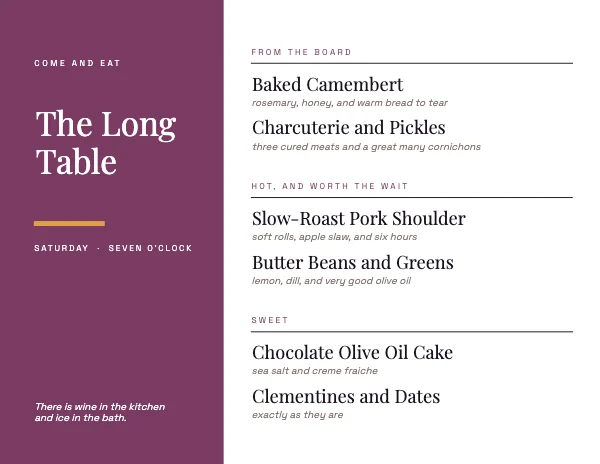 Elegant Party Menu
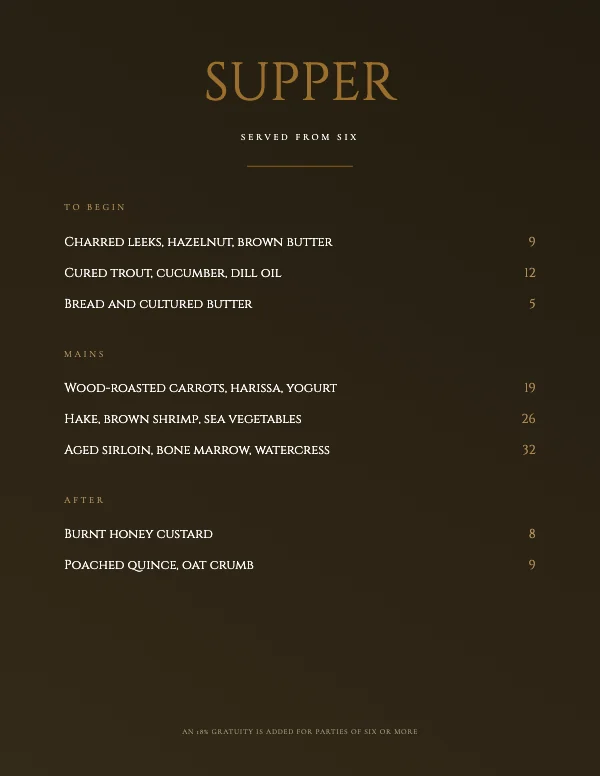 Elegant Restaurant Menu
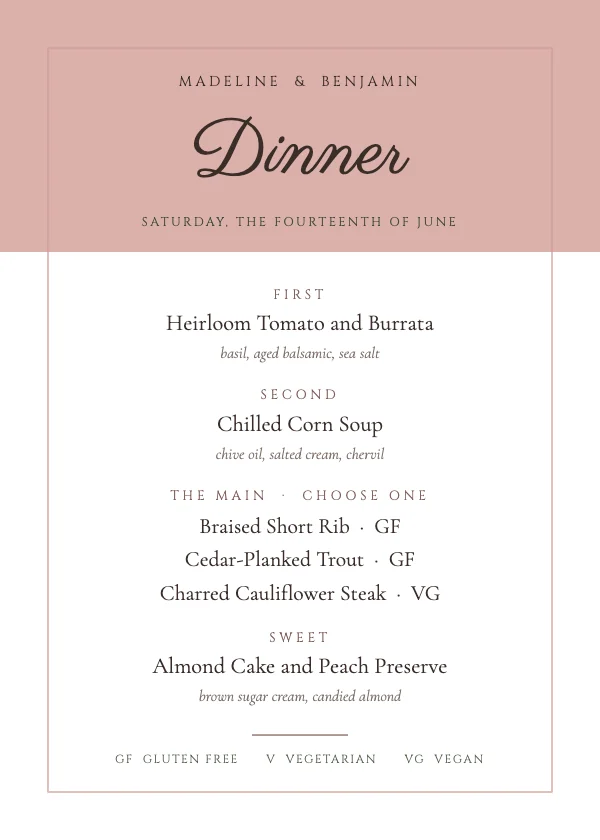 Elegant Wedding Menu Card
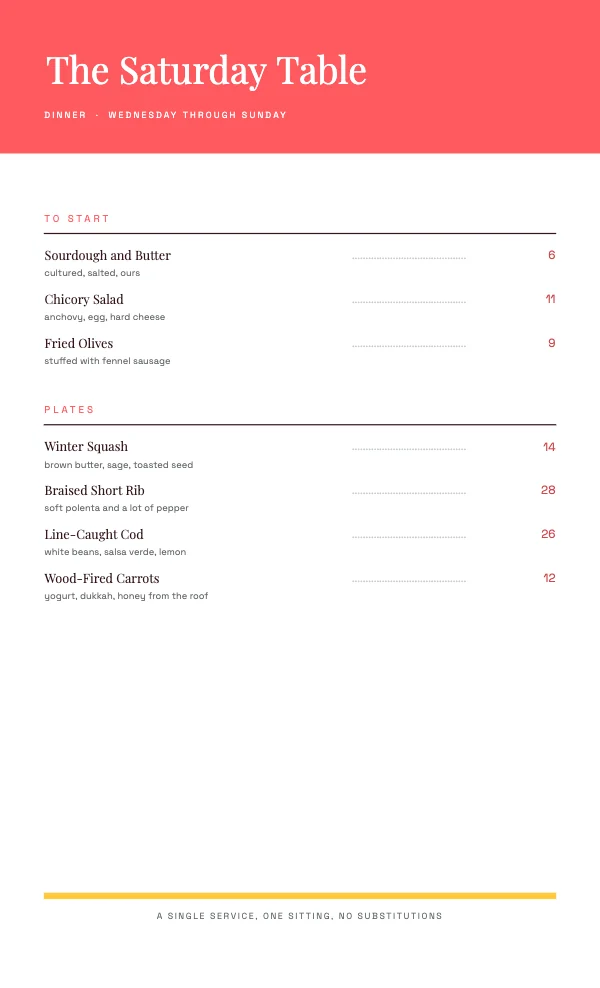 Banded Header Menu
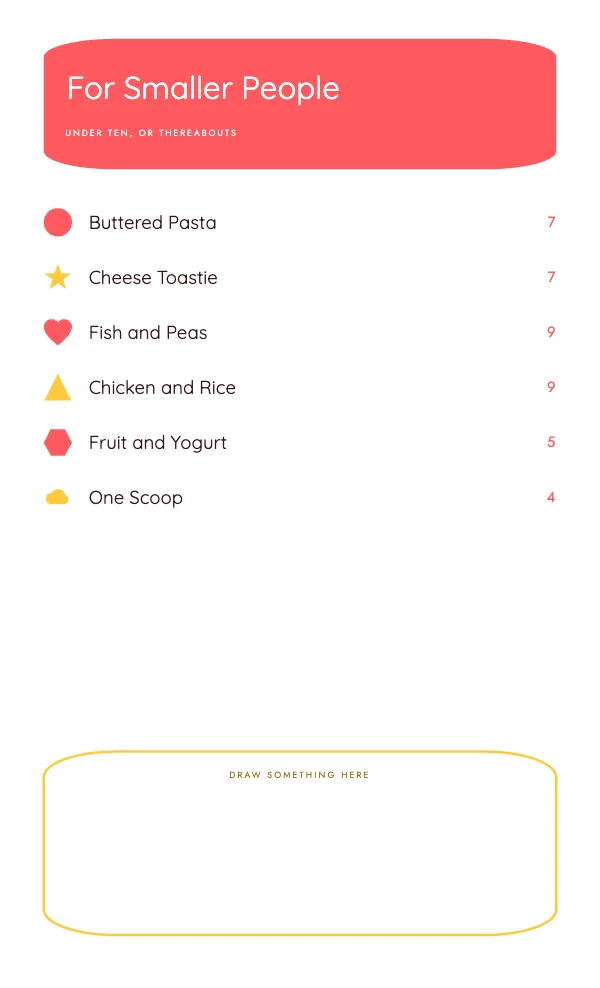 Kids MenuPro
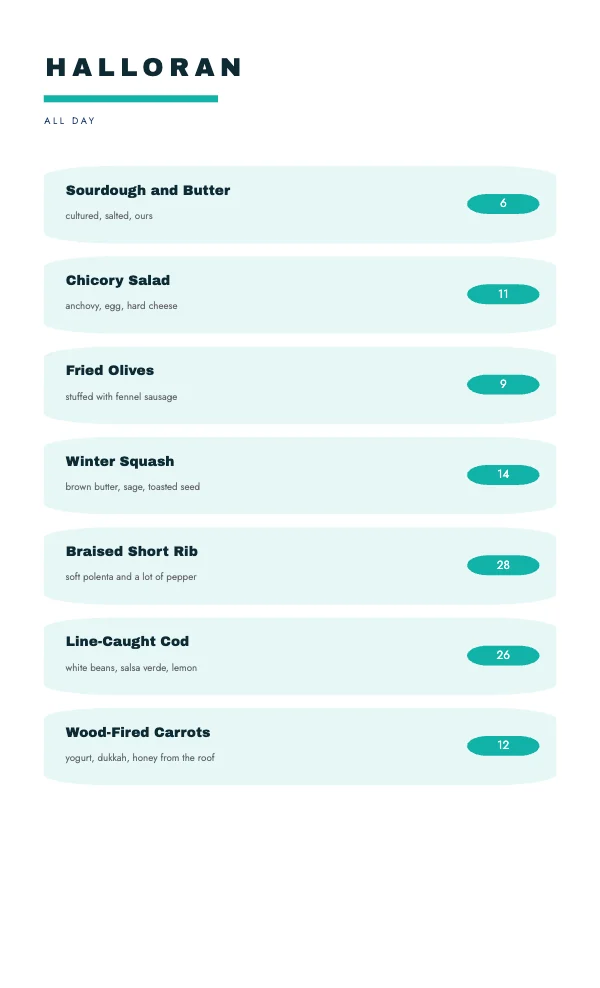 Price Box MenuPro
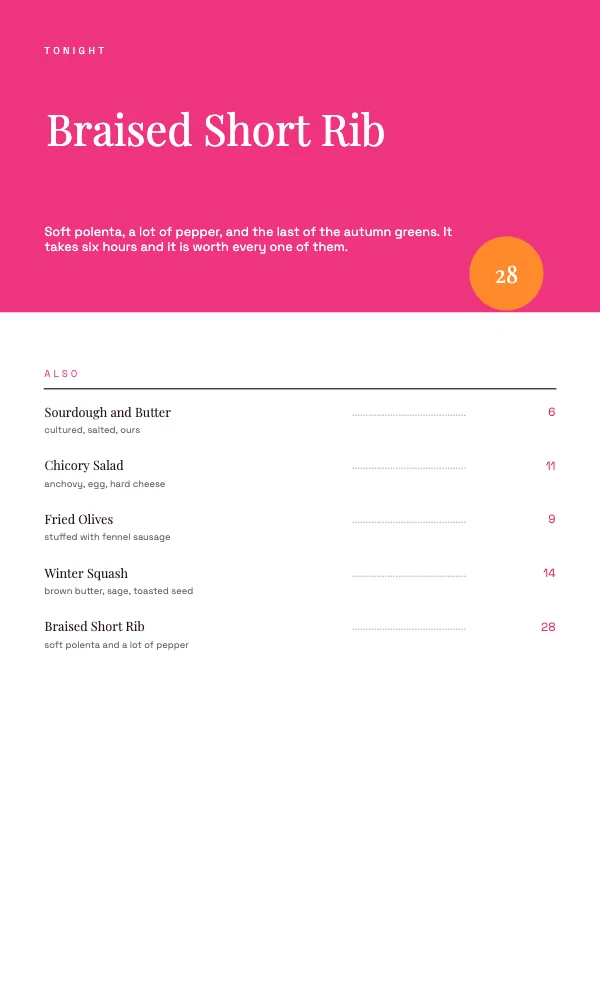 Daily Special MenuPro
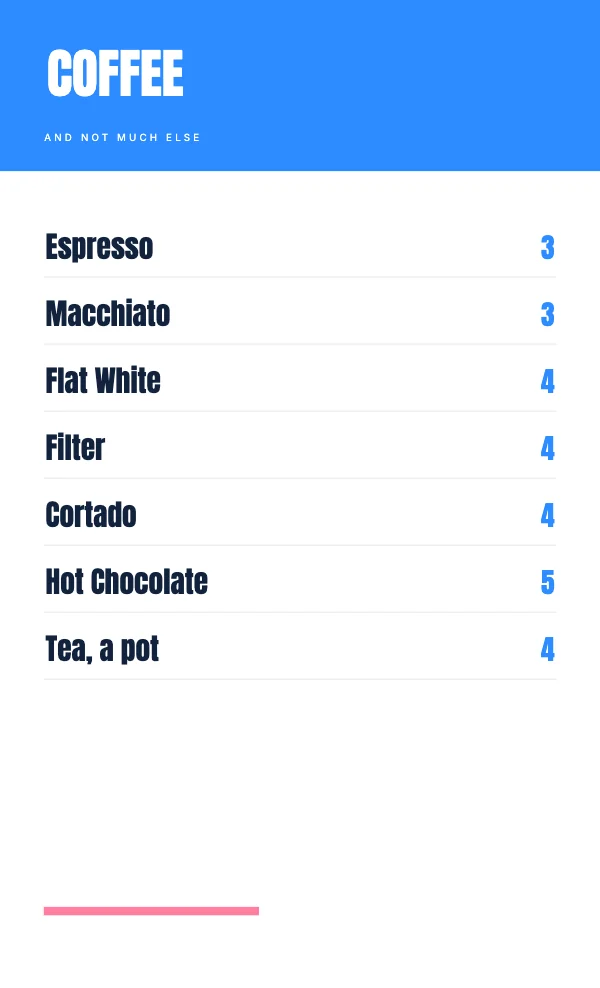 Cafe Board MenuPro
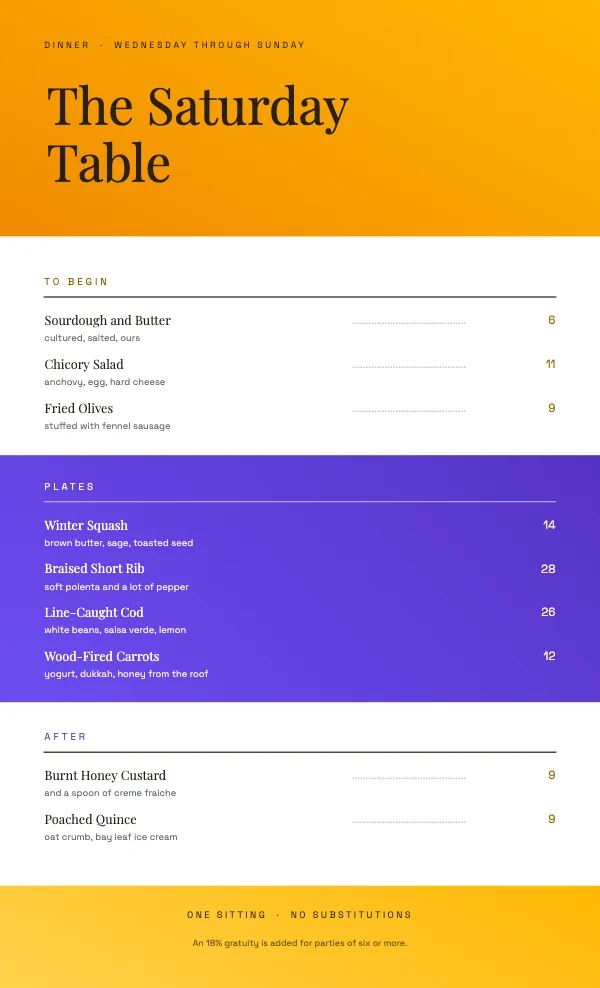 Stacked Panel MenuPro
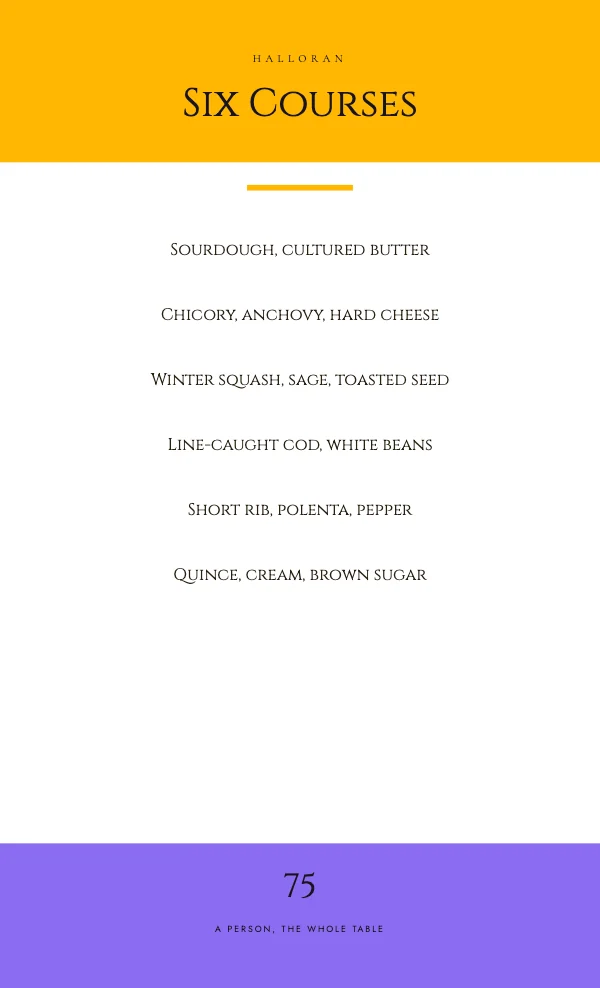 Tasting MenuPro
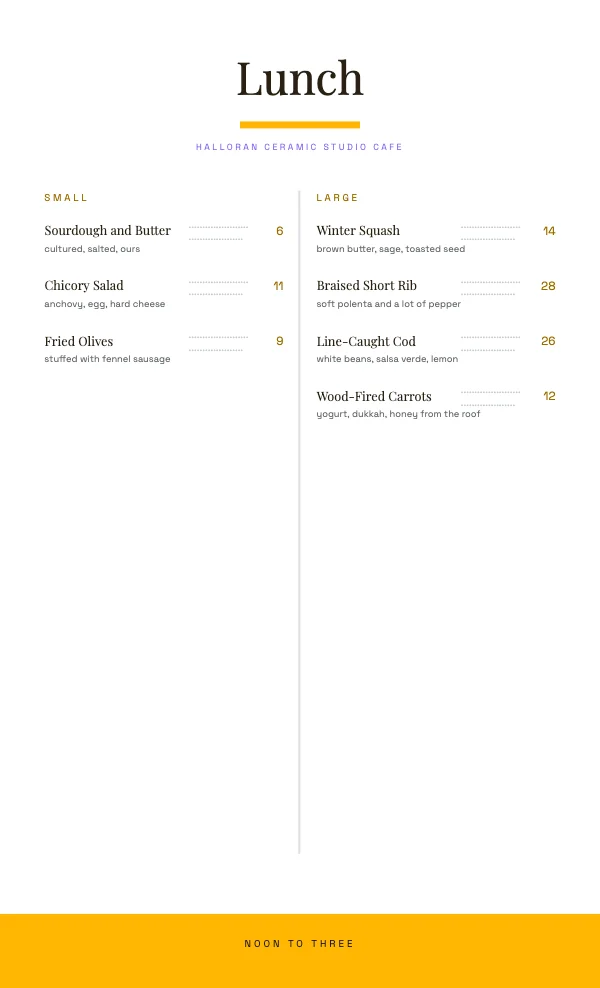 Two Column MenuPro
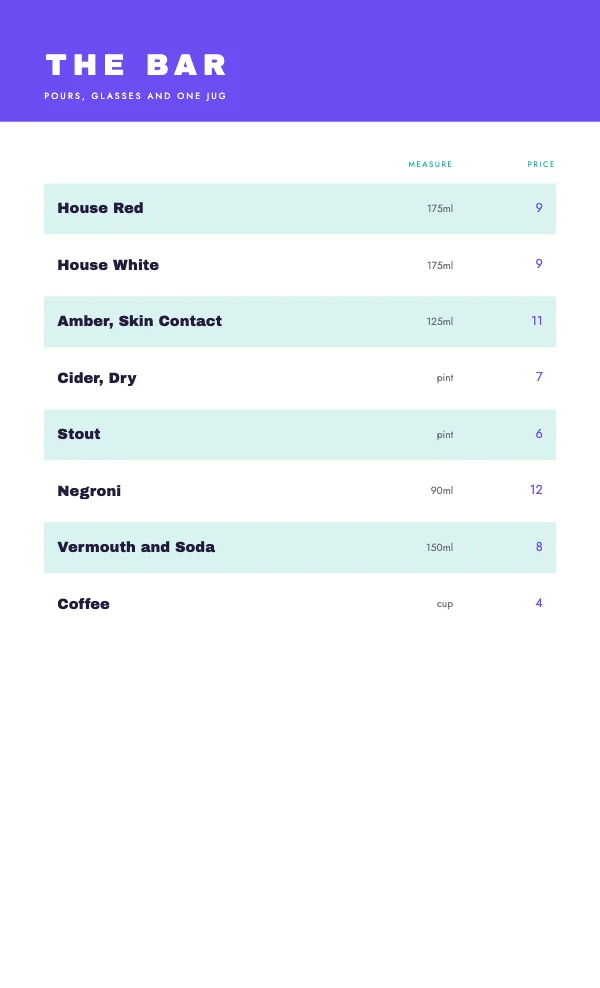 Drinks List MenuPro
Keep the prices editable, because they will change
The single most useful property of a menu template is not how it looks. It is whether you can change a price in thirty seconds two years from now.
Prices in these templates are separate text elements — not baked into an image, not part of a block of body copy with tabs holding it together. That matters because a menu that is painful to update gets a sticker over the price, or a handwritten correction, or it just stays wrong. All three cost more credibility than a plain menu ever would.
The same argument applies to the item list. A menu built as one long text block reflows when you delete a dish; a menu built as items reflows nothing.
Menus are read in bad light
This is the design constraint that separates a menu from a price list, and it is the one most templates ignore.
Restaurant lighting is dim, and a large proportion of diners are over forty and reading without the glasses they left at home. That gives three hard rules:
- Nothing below 10 point. 11 or 12 for item names. Descriptions can be smaller than names but not smaller than 9, and 9 is already a compromise.
- Real contrast. Gray text on cream is elegant on a screen at midday and unreadable at a candlelit table. Dark on light, or light on genuinely dark.
- Avoid light weights and tight tracking. A hairline sans at 10 point in low light disappears; a regular weight at the same size is fine.
The other convention worth knowing: drop the currency symbol and the trailing zeros. 18 rather than $18.00. It is not a style trend — a column of prices with symbols invites comparison shopping down the column, and reading the menu as a price list rather than as food is exactly the behavior a restaurant is trying not to trigger.
Which trim, and why there is more than one
8.5 × 14 (legal) is the restaurant trim and nine of the twelve are built on it. It is what a print shop already cuts a menu on, it takes a full food menu without crowding, and it is the one to use if the menu is going out to be printed properly.
8.5 × 11 and 11 × 8.5 (letter) are the ones you print yourself. A letter sheet comes out of any home or office printer, which matters for a menu that changes weekly and for an event where you need twelve of them tonight. The party menu is the landscape one — 11 × 8.5 — because a table menu is read across rather than down.
5 × 7 is a card, for a set menu or a single course placed at each seat.
If you are unsure: legal for a restaurant, letter for an event, card for a place setting.
Size and finish, by how the menu is used
8.5 × 14 is the trim these are built at, and it is the one shops already cut menus on — which is most of the reason to use it. It is also the proportion that reads as a menu rather than as a page of a document: the extra three inches take a full list without cramming, and it drops into a standard menu cover or board.
| Menu | Size | Why |
|---|---|---|
| Restaurant, table | 8.5 × 14 (legal) | What these templates are. The long format, and the trim shops cut menus on |
| Café or counter single sheet | 8.5 × 11 | Cheaper and reprintable weekly. There is one in the studio's Business Print section |
| Bar and drinks list | 8.5 × 14, or half of it | Changes most often — keep it the cheapest thing to reprint |
| Specials | half sheet or insert | Designed to be replaced daily; never part of the main file |
A menu is handled constantly, and handled paper is wet paper. Laminate it, sleeve it, or accept reprinting it. A laminated menu lasts months and cannot be changed; a paper menu in a clip can be changed tonight. Most places want both — a durable core menu and a cheap insert for what moves.
Uncoated stock is warm and takes a pen but marks with grease within a week. A light gloss or a synthetic stock wipes clean. For an outdoor A-frame, synthetic is the only thing that survives rain.
Allergens and required information
Many places require allergen information, calorie counts or specific notices on a menu, and the requirements vary by country, state and the size of the business. The templates leave a footer block for that text and do not attempt to supply it — the wording is set by your regulator and your supplier list, not by a template.
Design-wise, keep it consistently placed and legible. A required notice set in 6 point at the bottom of a page is present without being useful, and in some jurisdictions that is itself the problem.
This is general design information and not legal or regulatory advice; check your local requirements.
Questions
What size is a restaurant menu?
8.5 × 14 — legal size — is the common table menu trim and what these templates are. It is what print shops already cut menus on, and the extra three inches over letter take a full list without cramming. 8.5 × 11 is the café and counter size; there is one of those in Business Print.
What font size should a menu be?
11 or 12 point for item names and nothing below 10 point anywhere — 9 at the absolute floor for descriptions. Menus are read in dim light by people without their glasses, which makes them stricter than almost any other printed piece.
Should I put dollar signs on a menu?
Most restaurants drop the currency symbol and the trailing zeros — 18 rather than $18.00 — because a column of formatted prices encourages reading the menu as a price list rather than as food.
Can I print menus at home?
Only if your printer takes legal paper — 8.5 × 14 is longer than letter and many home trays stop at 11 inches. Check before you buy a ream. For a specials sheet, letter is easier and you will reprint it weekly anyway; for a durable table menu, a print shop plus lamination lasts far longer per dollar.
Should menus be laminated?
If the menu is stable, yes — laminated menus survive months of handling. If prices or dishes change often, use a cover or a clip with a cheap paper insert instead, because a laminated menu cannot be corrected.
How do I update prices later?
Open the file and edit the price, which is a separate element rather than part of a text block or an image. That is the main reason to keep the project file rather than only the PDF.
Do menus need bleed?
Only if color runs off the edge and a shop is printing it — 0.125 inch on each side. A menu printed in-house on a laser printer needs no bleed, because the printer cannot reach the edge anyway.
Where do allergen notices go?
In a consistently placed footer block, legibly. The exact wording is set by your local requirements and your suppliers, so get it from them rather than from a template. This is design information, not regulatory advice.
Can I use these for my restaurant?
Yes, including commercially, on the free plan, with no watermark, no royalty and no credit.
Where to go next
Put together an occasion
Every category
How printing works
Open any of these and it is already the right size. Bleed, margins and trim are set, and there is no watermark on anything you export — on any plan, ever.