
Crevano · Templates · Church Templates
Church Templates
The print a congregation actually makes: something new every single week, and a handful of things it makes once a year. 21 templates covering the weekly bulletin and its insert, the order of service, Vacation Bible School, Easter and Christmas Eve, baptism and baby dedication, connection cards, offering envelopes, a service-times yard sign, a vinyl welcome banner, two projected sermon slides, and the program a family needs on the hardest week of their life.
Every line is editable text, and no denomination, no verse text and no translation is assumed — the placeholders are structural, so the words are yours.
| Trim sizes | 24 × 18 in · 1920 × 1080 px · 8.5 × 11 in · 11 × 8.5 in · 8.5 × 5.5 in · 5.5 × 8.5 in · 5 × 7 in · 4 × 6 in · and more |
|---|---|
| Bleed | none · 0.125 in |
| Resolution target | 72 DPI · 150 DPI · 300 DPI |
| Templates | 21 |
| Pages | 22 |
No templates match that.
Church templates (21)
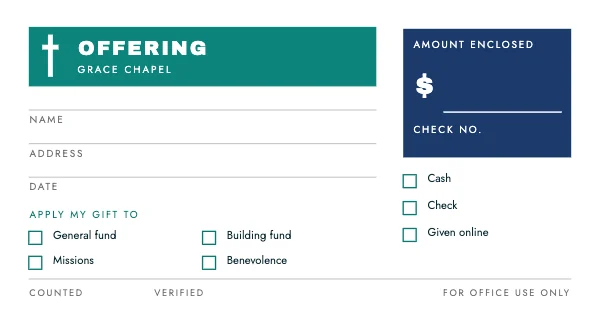 Church Offering EnvelopePro
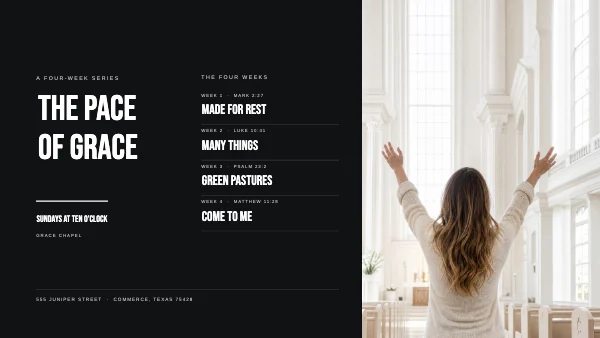 Church Sermon Series SlidePro
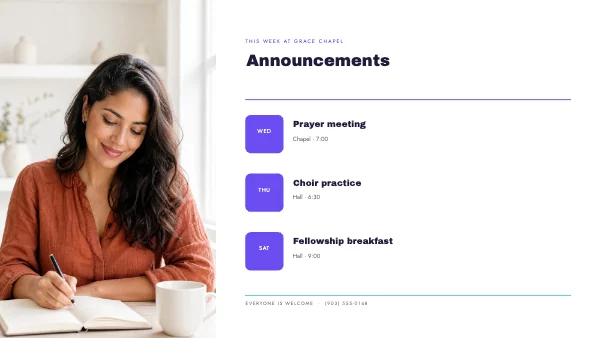 Church Announcement Slide
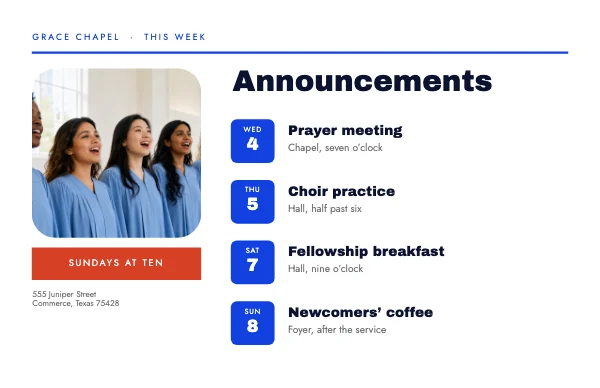 Church Bulletin InsertPro
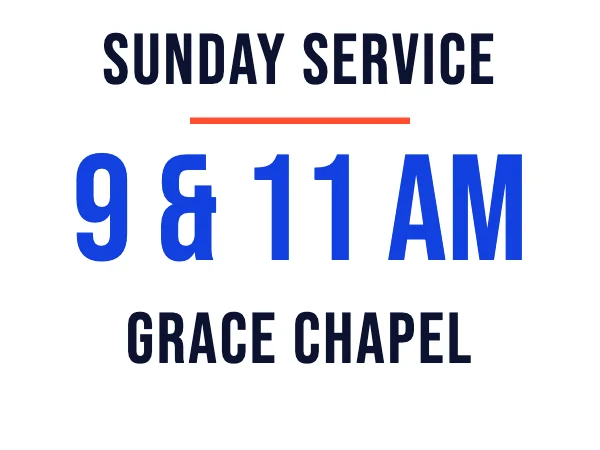 Church Service Times Yard SignPro
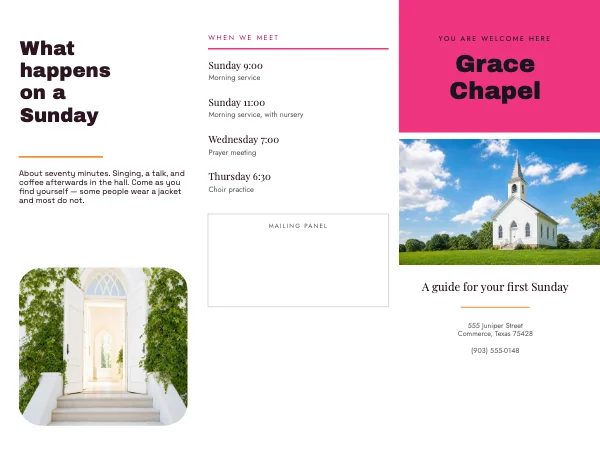 Church New Visitor Tri-FoldPro
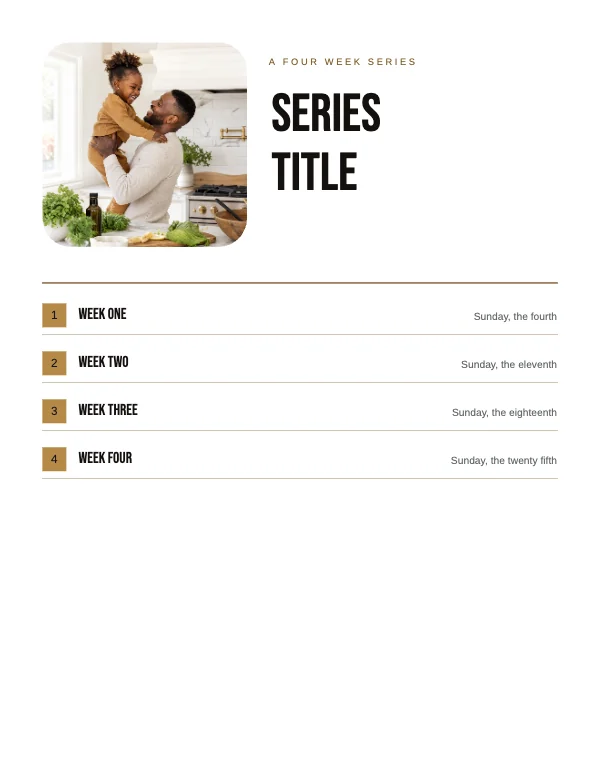 Sermon Series PosterPro
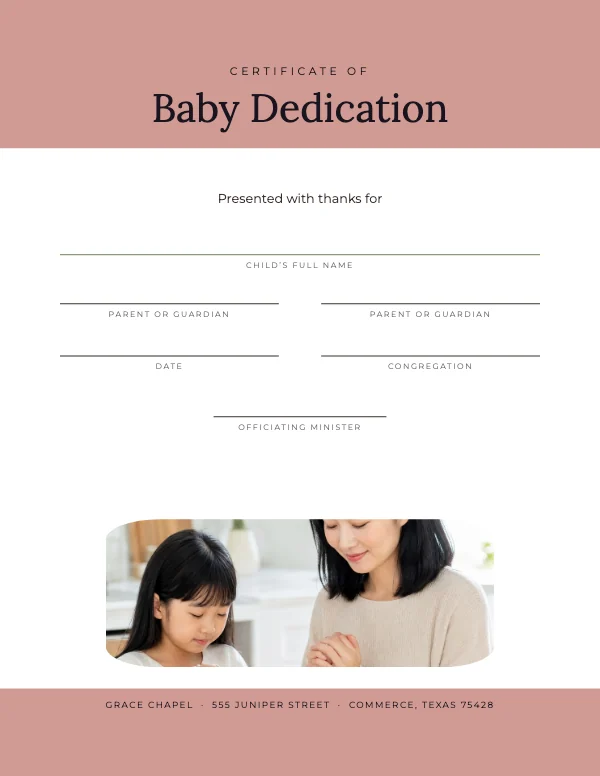 Baby Dedication CertificatePro
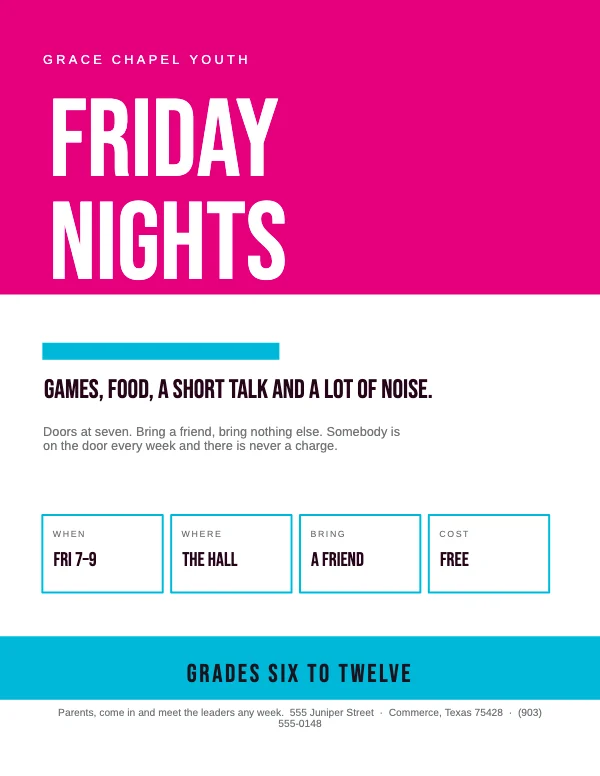 Church Youth Group FlyerPro
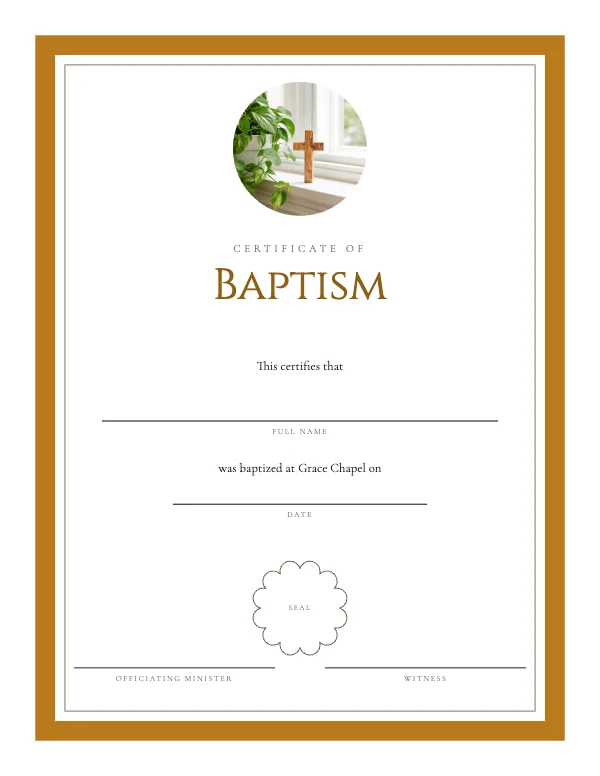 Baptism CertificatePro
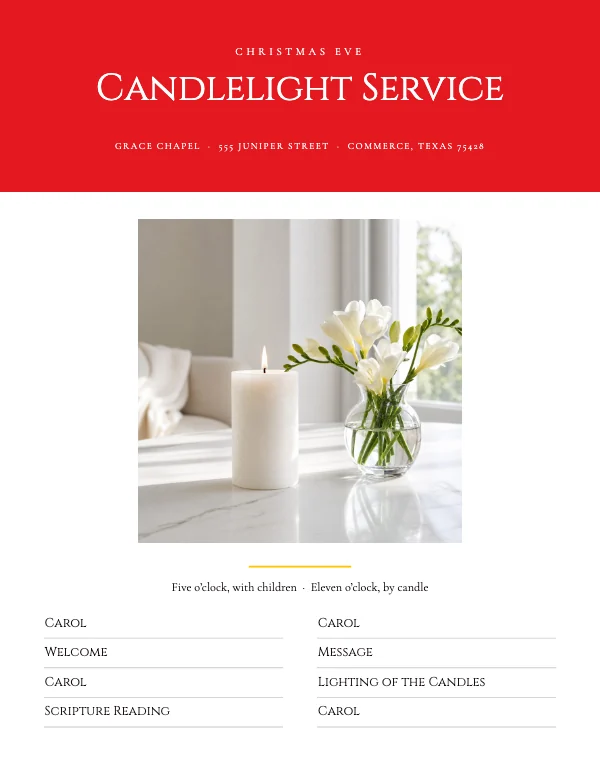 Church Christmas Eve Candlelight FlyerPro
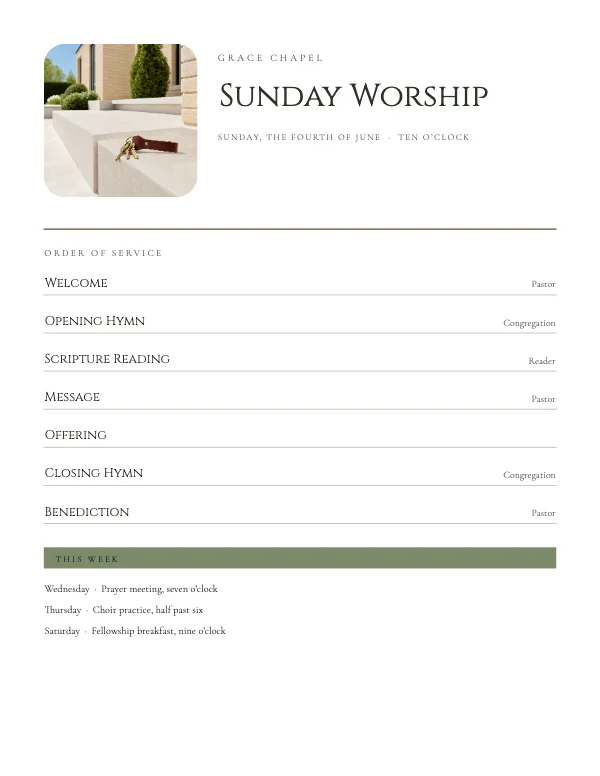 Weekly Church Bulletin
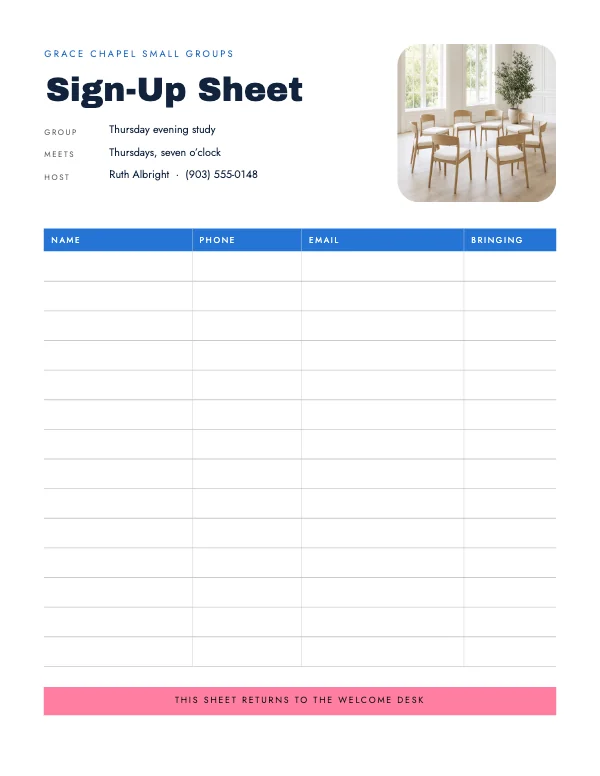 Church Small Group Sign-Up SheetPro
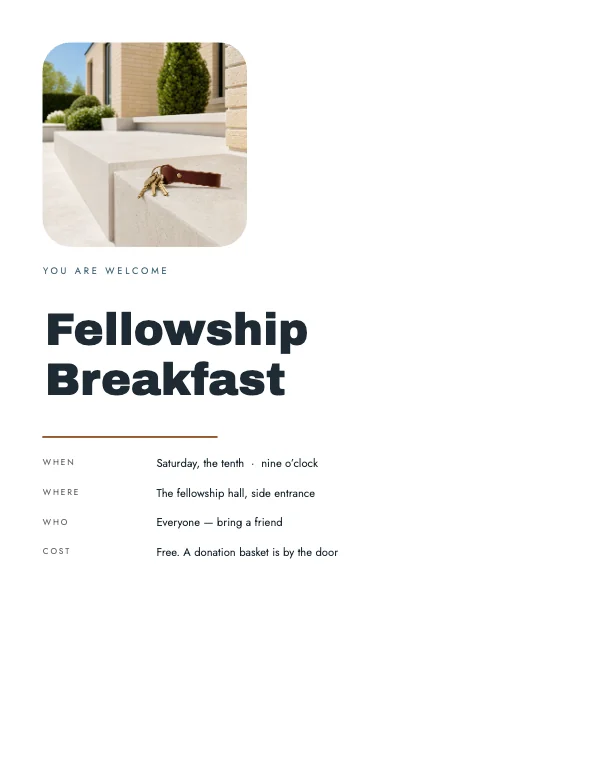 Church Announcement Flyer
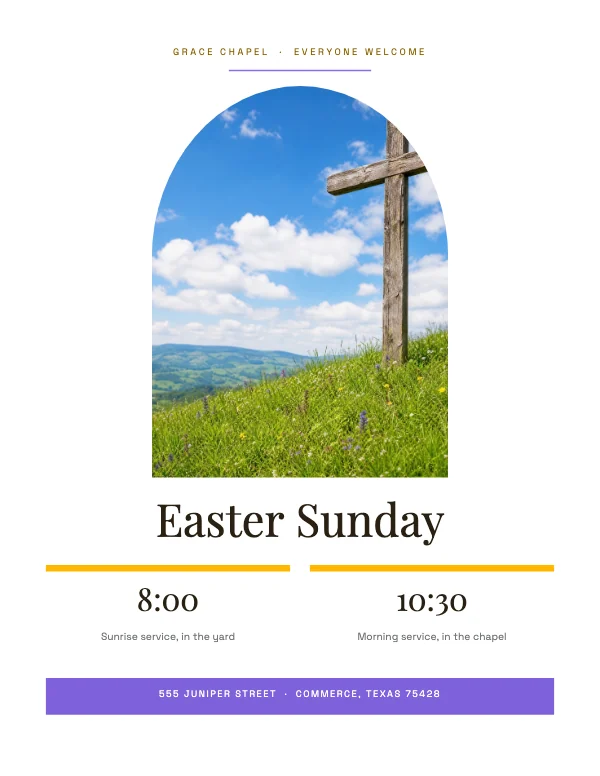 Church Easter Service FlyerPro
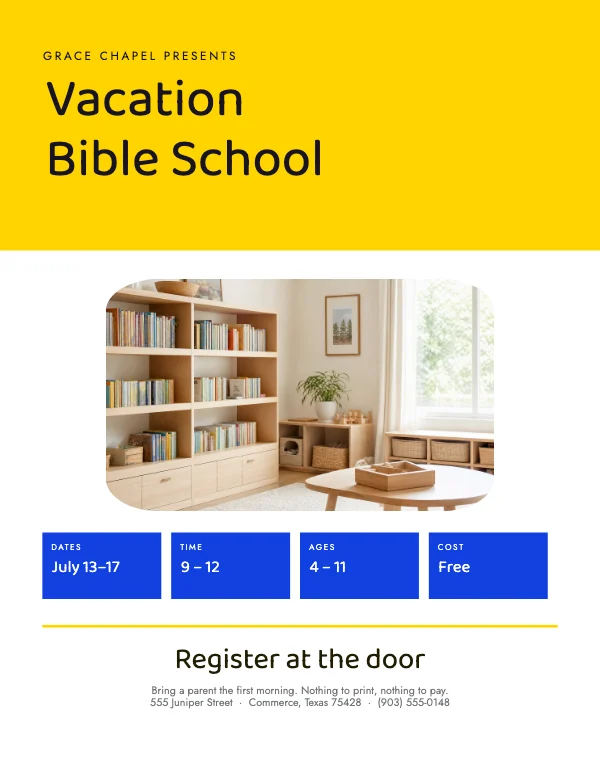 Church VBS FlyerPro
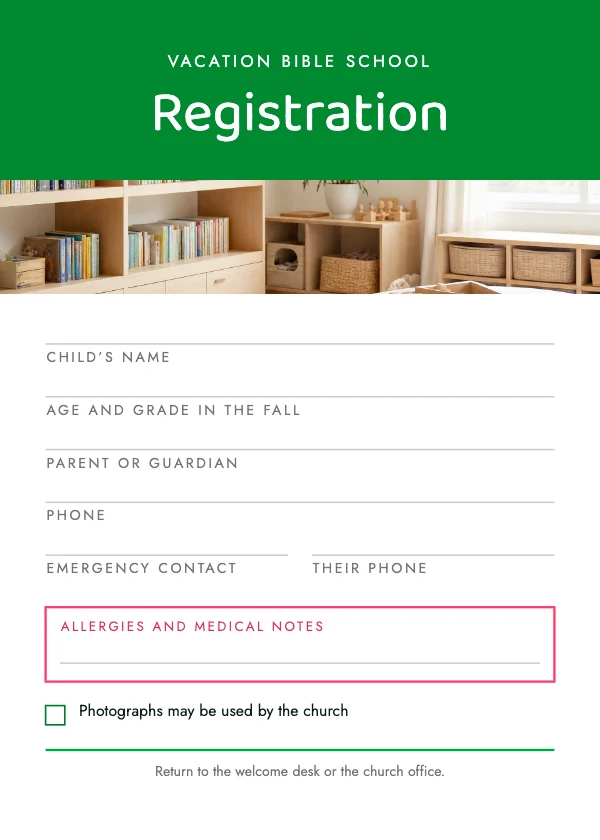 Church VBS Registration CardPro
 Seasonal Service Card
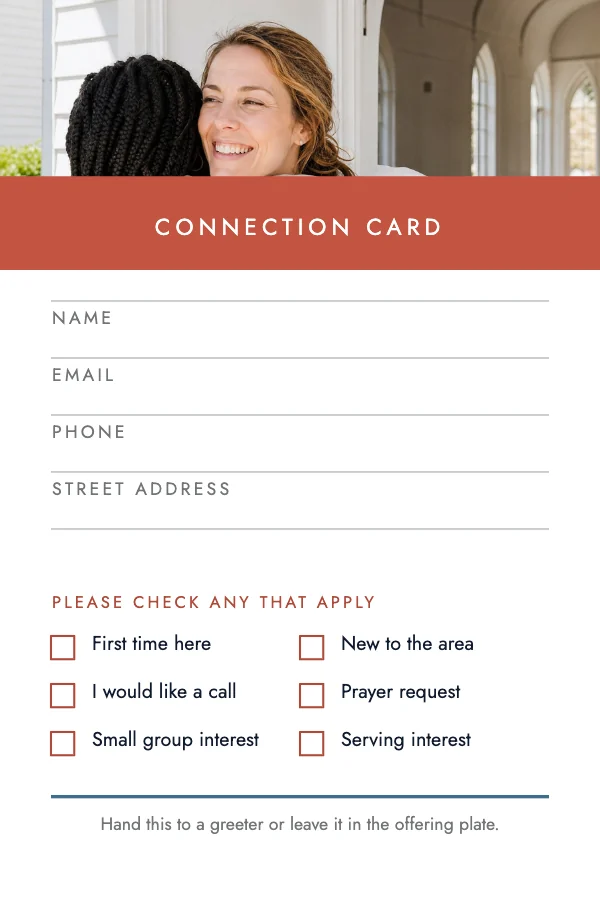 Church Connection CardPro
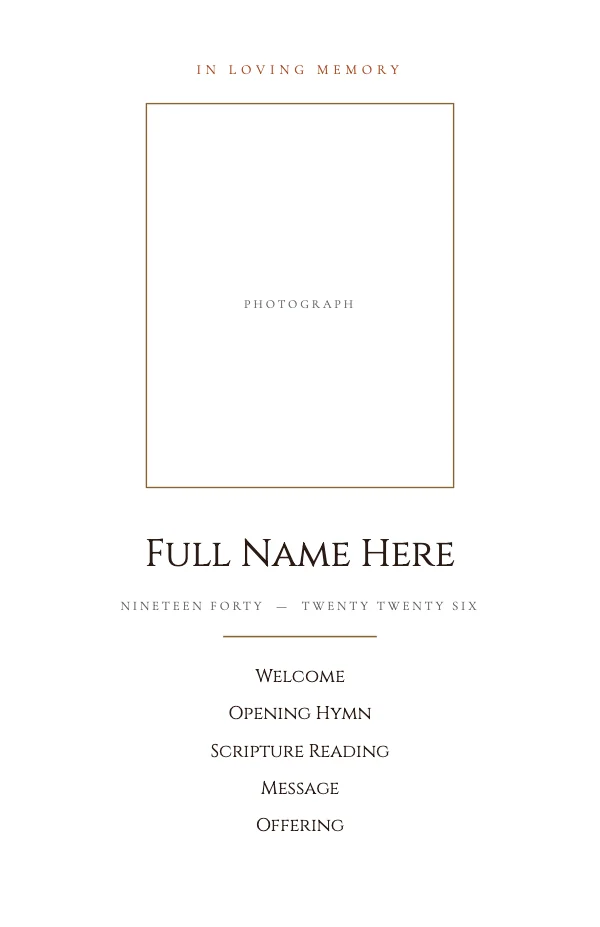 Memorial Service Program
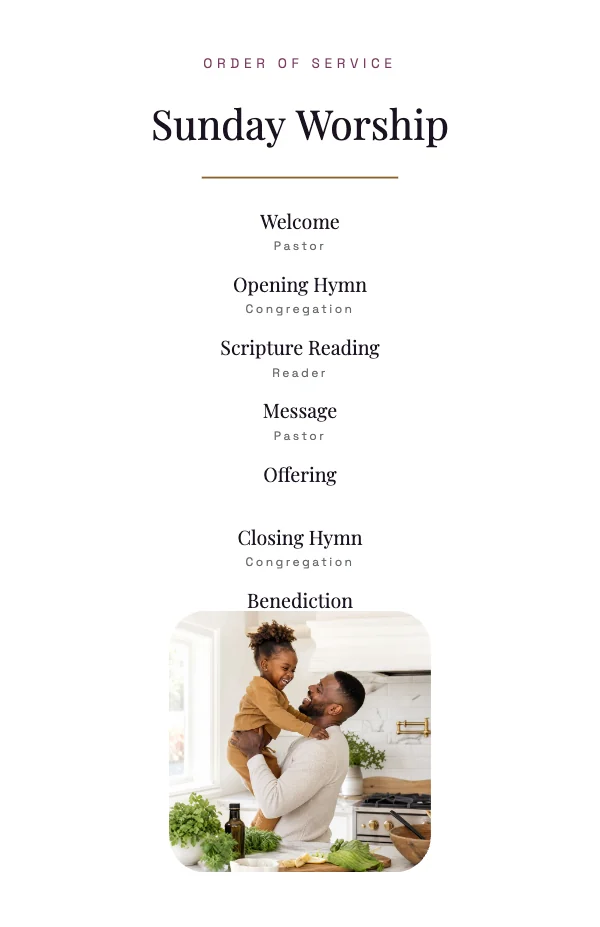 Order of Service
What is free here, and what is not
6 of these 21 templates are on the free plan: Slate and Cream 8.5 × 11 Church Announcement Flyer, Violet and Mint 1920 × 1080 Church Announcement Slide, Sage and Bone 8.5 × 11 Weekly Church Bulletin, Clay and Bone 5.5 × 8.5 Memorial Service Program, Plum and Amber 5.5 × 8.5 Order of Service, Teal and Gold 5 × 7 Seasonal Service Card. The other 15 carry a badge in the corner of the thumbnail and will be on the paid plan.
Crevano is a paid design app with a free basic tier. Opening the studio and designing in it costs nothing beyond a free account — your own photographs, the element library, screen exports as PNG or JPG, cloud saving, and a project file you can keep on your own device — and there is no watermark on anything you export, on any plan, ever. The paid plan will be the rest of the template library, the print PDF with bleed and crop marks, and the KDP export; it is not open for sign-ups yet, so nothing here is withheld in the meantime.
On either plan, what you make is yours to publish and sell. No royalty, no credit, the permission does not expire, and it still holds if you cancel. What you may not do is resell our photographs and clip art as things in themselves.
Built for the week, not for the launch
Most template sets are built for something that happens once. A church prints on a cycle, and that changes what a good template is.
The test is not how it looks the first time. It is whether the person doing it on Thursday evening — usually a volunteer, usually in a hurry — can change the readings, swap the photograph and get it to the copier without the layout moving. So the order of service is a list of separate lines rather than one text block, the announcements sit in their own area, and the masthead does not shift when a line is added underneath it.
The weekly bulletin and its insert are the clearest case. The same file goes through the machine fifty-two times a year, so what matters is that a volunteer can retype the readings and the announcements on Thursday without anything else on the sheet moving.
The sermon series poster works the other way, and it is worth knowing which one you are holding. It announces the whole series on one sheet — all four weeks, each with its title, its date and a scripture reference — so it goes up once at the start and stays up. Nothing on it changes week to week; the dates are the only thing you reset when the series runs again.
No denomination is assumed, and that is deliberate
There is no verse text, no translation, no creed and no denominational mark anywhere in these files. That is not an oversight and it is not neutrality for its own sake — it is the only way one template serves a Baptist bulletin and a Catholic order of service without insulting either.
The sermon templates are the one place scripture is named at all, and only as a reference: the four weeks of the example series each carry a chapter and verse where your own series will carry its own. A reference is a slot, not a mandate — retype it, or delete it and the line closes up.
What that means in practice: every placeholder is structural. "Opening hymn" is a slot, not a recommendation. If your tradition puts the offering before the sermon, move the line — the layout does not care, because nothing is anchored to anything below it.
If you add a verse, the translation decides what you owe
This is the one thing worth knowing before you type scripture into a bulletin you are about to run off two hundred times, and almost nobody mentions it.
A Bible translation is a copyrighted work. The text is ancient; the translation is not. The King James Version is in the public domain and you can set as much of it as you like with no permission and no credit. NIV, ESV, NLT, NASB and CSB are each in copyright. Every one of them publishes its own permissions policy — how many verses you may quote before you need to write in, and what proportion of the finished piece the quotation may be — and most of them require a credit line printed on the piece itself, usually the translation's abbreviation and a copyright notice.
None of that is a reason to avoid your translation. It is a reason to read that translation's permissions page once and then put the required credit into the template, where it will be on every copy you ever print. There is room at the foot of the bulletin and the order of service for exactly that.
We ship no verse text in any file — the sermon templates name a chapter and verse, which is a citation and not a translation — so nothing here carries an obligation until you set the words themselves. Once you do, the obligation is attached to the text you chose rather than to anything we drew.
Not legal advice, and we are not your lawyer. The translations publish their own terms and those terms are the authority.
Some of these go on the copier and some do not
This is the place a church print set differs most from a commercial one, and getting it wrong wastes a whole run. The set splits three ways, and the bleed setting tells you which pile a file is in.
Ten of the twenty-two carry no bleed, and those are the copier jobs — the Easter flyer, the bulletin insert, the small group signup, the baptism certificate, the memorial program and the offering envelope among them. A copy machine cannot print to the edge of a sheet, so a design that reaches the paper's edge comes out with a white margin around it and everything shifted. Designed without bleed, the sheet you copy is the sheet you meant.
Twelve carry 0.125 inch of bleed, and those expect a trim. The weekly bulletin, the order of service, the VBS flyer and registration card, the connection card, the seasonal card and the announcement flyer are drawn for a shop or a print service that prints oversized and cuts back. Running one of those on a copier is not a disaster — you get a white edge — but you are paying for a design decision you are not using.
Two are not printed at all. The sermon slides are 1920 × 1080 pixels, for a projector.
Two are not office print either. The 96 × 36 inch welcome banner is vinyl and the 24 × 18 inch service-times sign is coroplast — both are outdoor jobs for a sign shop, and neither has anything to do with the copier down the hall.
The 5.5 × 8.5 order of service and memorial program are the case worth understanding on their own. They are half of a Letter sheet, so you print two-up on 8.5 × 11 and cut down the middle — one sheet of paper, two programs, no special stock and no shop.
The memorial program deserves its own paragraph
A family is making this in the two days after a death, and they should not have to make design decisions while they do it.
So the portrait slot is already sized and positioned, the dates sit where a reader looks for them, and the order of the service runs underneath in one column that reflows cleanly if there are five items or twelve. There is nothing decorative to remove. The palette is quiet on purpose — bright primaries are wrong here and no ordering rule should ever put them in front of somebody in that week.
What the photograph is doing, and where there deliberately is not one
Seventeen of the twenty-two carry a photograph, and on those it is load-bearing rather than decorative: on a page with no verse text and no denominational mark, the photograph is what makes a bulletin feel like your church rather than a form. The trifold visitor guide carries five, because a guide to a building is a tour.
Square works best. A photograph placed at 6.40 × 6.40 inches at 300 DPI covers every slot in this set, and a picture of your own building, your own hall or your own people beats anything generic — including anything we could supply.
Five carry no photograph at all, and each one is a decision rather than a gap:
- The offering envelope is printed ten thousand at a time. A photograph on it is ink you buy by the case and nobody looks at.
- The welcome banner and the yard sign are read from across a parking lot. At 96 inches wide, the largest church photograph in our library — 22 inches at that resolution — would print as a stamp in the corner. Type and drawn shapes are what work at that distance, and they are what is on them.
- The youth flyer is doing its work with two loud colors, and a photograph would compete with them.
- The memorial program has a portrait slot placed and sized, waiting for the one photograph that matters. Nothing else belongs on it.
Questions
What size is a church bulletin?
8.5 × 11, printed on a copier, is the common weekly format and it is what the bulletin here is built at. The folded alternative is a Letter sheet folded to 5.5 × 8.5, which is what the order of service uses. Both print on ordinary paper from an ordinary machine.
What is the difference between a bulletin and an order of service?
The bulletin is the whole handout — the order of service plus announcements, notices and contact details. The order of service is only the running order of the service itself. Small churches often print one document doing both, which is what the weekly bulletin here is; larger ones print the order of service separately for occasions.
Do I need bleed?
It depends which file, and the file already knows. Ten of the twenty-two are built with no bleed and those are the copier jobs; twelve carry 0.125 inch and those expect a shop to trim them. Turning bleed on for a photocopy job makes the result worse, not better — the machine cannot reach the edge anyway, and the driver shifts the page trying.
What size is a VBS flyer?
8.5 × 11, which is what the Vacation Bible School flyer here is — the size that goes home in a backpack, onto a noticeboard and through a copier without being reformatted. The matching registration card is 5 × 7, small enough to hand over at a door and large enough to write on. Both are editable, so the theme, the dates, the ages and the cost are yours to set.
Can I print the welcome banner myself?
No, and nothing about it is designed as if you could. It is 96 × 36 inches — eight feet — and it is a vinyl banner for a sign shop or an online banner printer. The outer 2 inches are left clear on purpose, because grommets are punched through the hem after trimming and anything in that strip gets a hole in it. The same applies to the 24 × 18 inch yard sign, which is printed on 4 mm corrugated plastic with the flutes running vertically — the only orientation an H-stake will go into.
Are the sermon slides printable?
No. They are 1920 × 1080 pixels for a projector or a screen, not a trim size, and they are dark on purpose because a projected slide is light on dark. Every word sits on a solid ground beside the photograph rather than over it, so swapping the picture never sends you back to re-check the type.
Can I print the order of service two-up?
Yes, and that is what the 5.5 × 8.5 trim is for. Two per Letter sheet, cut down the middle. It halves both the paper and the time at the machine.
Can I change the order of the service?
Yes. Every line is a separate text element, so lines can be retyped, reordered, added or deleted and nothing below them jumps. Nothing in the file assumes a particular liturgy.
Is there a verse or a translation in these?
No verse text and no translation, deliberately. Placeholders are structural — "reading", "hymn", "message" — so the words are yours and no translation is chosen for you. The sermon templates name a chapter and verse for each week of the example series, which is a reference rather than a quotation; it is there to be replaced with your own.
That last part cuts both ways, and it is worth knowing: the King James Version is public domain, while NIV, ESV, NLT, NASB and CSB are copyrighted translations that publish their own quotation limits and mostly ask for a credit line printed on the piece. If you set a verse from one of those, check that translation's permissions page and put the credit in the template once. Nothing we ship carries that obligation, because nothing we ship sets a verse in any translation.
Can I use these for a funeral outside a church?
Yes. The memorial program carries no denominational mark, so it works equally as a celebration of life program at any venue. The only thing to change is the wording of the headings.
Can I use these commercially?
Yes, including for a church that charges for an event, and including work you do for a congregation as a paid designer. No royalty, no credit, and the permission does not expire. That is true on the free plan as well as the paid one, and it stays true if you cancel.
Where to go next
Put together an occasion
Every category
How printing works
Open any of these and it is already the right size. Bleed, margins and trim are set, and there is no watermark on anything you export — on any plan, ever.