
Crevano · Templates · Banner and Sign Templates
Banner and Sign Templates
8 banners at 48 × 24 inches — four feet by two, the size small-business vinyl is actually stocked and priced at — built at 150 DPI at final size, with the hem and grommet allowance drawn as real elements so nothing important ends up folded away or punched through.
| Trim size | 48 × 24 in |
|---|---|
| Bleed | none · 0.25 in |
| Resolution target | 150 DPI |
| Templates | 8 |
| Pages | 8 |
No templates match that.
Banner and sign templates (8)
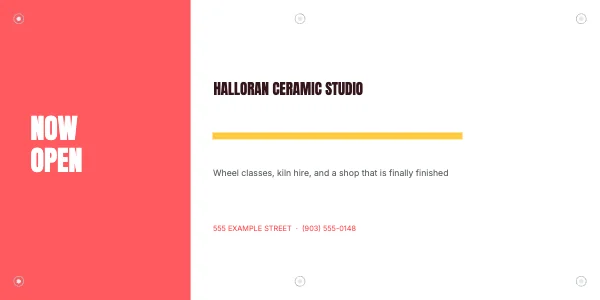 Grand Opening BannerPro
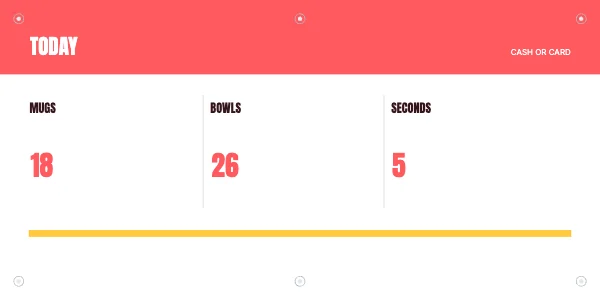 Price Board BannerPro
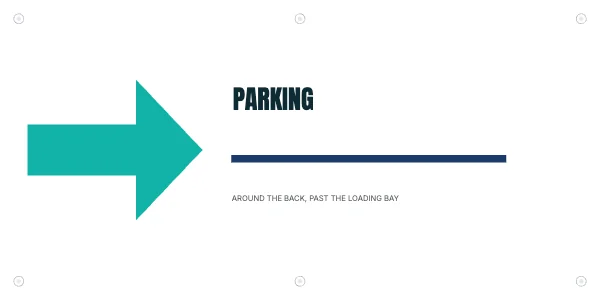 Directional Banner
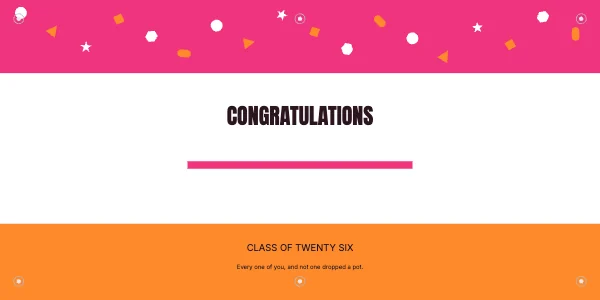 Congratulations Banner
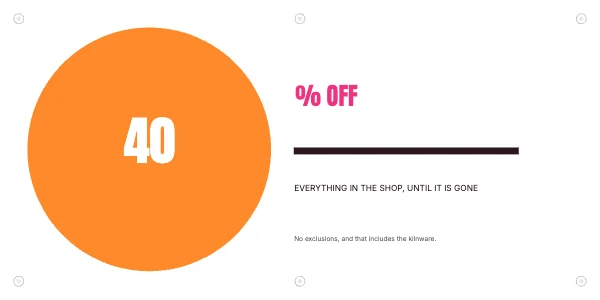 Sale Banner
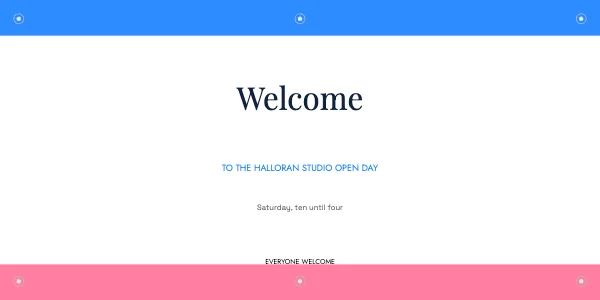 Welcome BannerPro
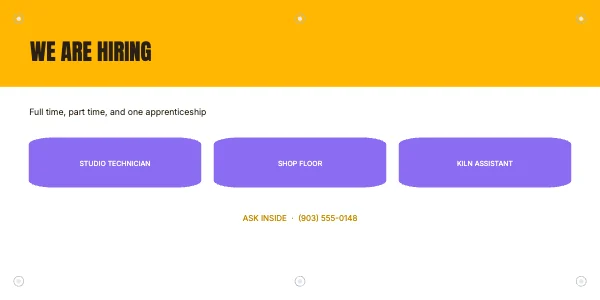 Now Hiring BannerPro
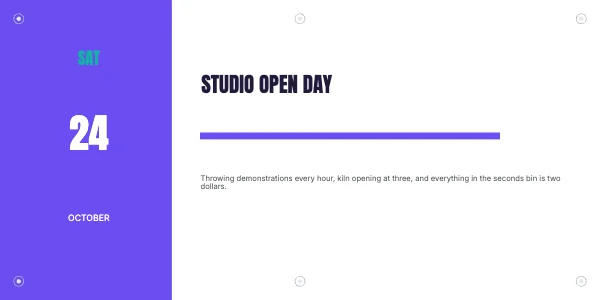 Event Date Banner
Resolution on something eight feet wide
This is where the viewing-distance principle stops being a nicety and becomes the only way to make a workable file.
These templates are 150 DPI at final size, which is what large-format printers ask for on their own file-preparation pages. At 48 × 24 that is a 7,200 × 3,600 pixel canvas — a real file, and one you can work in and upload.
Two things follow, and the second is why this page stops at four feet.
Going higher buys nothing. The same banner at 300 DPI is 14,400 × 7,200 pixels — 104 megapixels — for detail no viewer standing fifteen feet away can resolve. Most upload forms reject it and some browsers will not render it at all.
Going wider stops being workable. An 8-foot banner at the same honest 150 DPI is a 14,400-pixel canvas, and Crevano's export rasterizes every page, so that is a genuine ceiling rather than a preference. 48 × 24 is the size that is both the common small-business vinyl and a file this tool can actually produce well.
| Read from | Sensible target | 48 × 24 at that target |
|---|---|---|
| 8–15 ft — a storefront, a table, a stall | 150 DPI | 7,200 × 3,600 px |
| 15–30 ft — across a car park, a hall | 100 DPI is still sharp | 4,800 × 2,400 px |
| 50 ft+ — a roadside, a stadium | printers often work at 50 DPI or less | — |
If a vendor asks for something larger than 48 × 24, the industry method is to build at one tenth scale at 300 DPI — a 96 × 24 banner drawn as 9.6 × 2.4 inches — and tell them to output at 1000%. Same pixels, a workable file. If you do that, every measurement on this page divides by ten too.
Hems, grommets and pole pockets eat the edges
A banner is finished, and finishing takes material.
- A hem folds the outer edge back and stitches or welds it. That is typically 1 inch off each side that disappears from view.
- Grommets are metal eyelets punched through the hem, usually every 2 to 3 feet and at every corner. A grommet sits about 0.75 inch in from the edge, and it punches a hole through whatever is printed there.
- A pole pocket is a much deeper fold for a rod or a rope — commonly 3 to 4 inches at the top and bottom, and entirely invisible once hung.
So the safe area on a banner is far larger than the bleed: keep everything meaningful at least 2 inches inside the edge on a hemmed and grommeted banner, and 4 inches at the top and bottom if it has pole pockets. Confirm the finishing with the vendor before you lay out — it is the single question that changes the design most, and it costs nothing to ask.
Type that works at thirty feet
The rough guide that holds up outdoors: one inch of cap height per thirty feet of viewing distance for something read at a glance by someone moving, and one inch per ten feet for something read standing still. A banner across a road wants letters measured in inches, not points.
At that scale the design collapses to almost nothing, and that is correct:
- Three to five words at the largest size. A banner is not a paragraph.
- One piece of contact information, and only if the reader is stationary. Nobody reads a phone number from a moving car.
- Maximum contrast. Outdoors, in daylight, against sky and traffic and foliage, mid-tone on mid-tone disappears.
- Wind matters. A banner with a large solid field acts as a sail; mesh banners have holes through the print and lose about 30% of their apparent color saturation, so design them darker than looks right.
Questions
What size is a standard banner?
48 × 24 inches — four feet by two — is the common small-business vinyl size and what these templates are. 72 × 36 and 96 × 24 are also stocked by most vendors. The standard sizes exist because they suit the material rolls, so a custom size costs more and takes longer.
What DPI should a banner be?
150 DPI at final size, which at 48 × 24 is a 7,200 × 3,600 pixel file. That is what large-format printers ask for on their own file-prep pages. 300 DPI would be 104 megapixels for detail nobody can resolve at fifteen feet, and most upload forms would reject the file.
How much space do grommets and hems take?
A hem folds back about an inch on each side and a grommet punches a hole roughly three quarters of an inch in from the edge. Keep everything important at least 2 inches inside the edge, and 4 inches top and bottom if the banner has pole pockets.
What is a pole pocket?
A deep fold at the top or bottom — usually 3 to 4 inches — that a rod or rope passes through so the banner can be hung. Everything inside that fold is invisible once it is up, so it must be empty.
How big should the text be on a banner?
About one inch of letter height per thirty feet of viewing distance for a reader who is moving, and one inch per ten feet for one standing still. Three to five words at the largest size; a banner is not a paragraph.
Should I choose vinyl or mesh?
Vinyl for indoor and sheltered use and for the best color. Mesh outdoors where wind is a factor — it has holes through the print so it does not act as a sail, at the cost of about 30% of the apparent saturation, so design it darker than looks right on screen.
Does a banner need bleed?
Ask the vendor. Many large-format printers want the file at final size with no bleed and handle the hem allowance themselves; others want an inch. The finishing decides it, which is why it is the first question rather than the last.
Can I print a banner at home?
No — a 48 × 24 banner is four feet wide, and it is vinyl rather than paper. Print a scaled proof on 8.5 × 11 to check the layout, the copy and the contrast, then send the full file out. A quarter-size proof catches a typo in a phone number for the price of one sheet.
Can I use these for business signage?
Yes, including commercially, free plan included, with no watermark, no royalty and no credit.
Where to go next
Put together an occasion
Every category
How printing works
Open any of these and it is already the right size. Bleed, margins and trim are set, and there is no watermark on anything you export — on any plan, ever.